Crime Magazine is about true crime: organized crime, celebrity crime, serial killers, corruption, sex crimes, capital punishment, prisons, assassinations, justice issues, crime books, crime films and crime studies.

 About  |  Advertise  |  Awards  |  Blogs  Books of NoteContact  |  Forums Links  | Newswire  |  Print  Store  |  Subscribe  |  Writer's Corner

J. J. Maloney

<p>J. J. Maloney, an award-winning journalist and founder and editor of Crime Magazine, passed away December 31, 1999, at his mother's home in Webster Groves, Mo. He was 59. Read More About JJ Maloney <a href="/jj-maloney">here</a>.</p>

River Quay: How a Courageous Newspaper, and an Ex-convict Reporter, took on the Kansas City Mafia, and Won

The City Market Kansas City, Missouri

The City Market Kansas City, Missouri

A first-hand investigative report of the Kansas City Mafia's attempt to take over a major Kansas City entertainment area in the mid-1970s -- an effort that included bombings, extortion, and a large number of murders.

by J.J. Maloney

Every city dreams of greatness. To achieve an identity it constructs symbols (the Eiffel Tower, the St. Louis Arch), or, like New Orleans, has an area, such as the French Quarter, that assumes an identity of its own.

Traditionally Kansas City has been known as a cowtown. It was famous for its stockyards, and the biggest annual event still is the American Royal, during which journalists shake cow patties from their shoes. Kansas Citians are sensitive about that image, feeling it gives them a "hick" reputation.

They point with pride to the Country Club Plaza or Westport, but neither has ever achieved a national reputation. They promote Kansas City as the birthplace of jazz, a claim other cities dispute. They go so far as to call Kansas City the home of great barbecue; local politicians devote great amounts of space to that subject. Such is the desperation for an identity.

To Live And Die In Belton USA

Updated Dec. 19, 2007

Belton Missouri

The story of Jeffrey Gardner, a young man sentenced to prison for shooting an abusive husband who was threatening his wife with a knife. After the printing of this story, the Missouri Court of Appeals, Western District, on March 2, 1999, overturned the conviction of Gardner -- who was sentenced to 20 years in prison for the shooting.  Gardner was a boarder in the couple's home at the time of the shooting. On Dec. 7, 1999, the Missouri Supreme Court did overturn the appellate court opinion. Gardner is serving his sentence at the state penitentiary in Jefferson City, Mo. Click here to read the Missouri Supreme Court decision.

by J.J. Maloney

Carol Drummond could feel feel the noose tightening around her throat.

For more than five years the 38-year-old Belton resident had been stalked, threatened and vilified by the friends of Phillip Hancock, her late husband.

In August, 1991, Drummond called police after Hancock threatened her with a bayonet. In December, 1991, the 6-foot-2-inch Hancock hurled Drummond to the ground, breaking her collarbone because her dog had urinated on the floor. A judge ordered Hancock to stay away from Drummond.

Hancock then lived with a friend, Mark Lassince, until he made up with Drummond and moved back in with her, in January, 1992. Also living in the house were Jeffrey Wayne Gardner, an attractive, soft-spoken, 28-year-old boarder, and Jackie, the 8 year old daughter of Hancock and Drummond (she kept her own name after the marriage).

In the early afternoon of March 7, 1992, Hancock called the Belton police and talked with the dispatcher. Hancock wanted police to eject Gardner from his house. The dispatcher explained that, since Drummond was half-owner of the house, if she wanted Gardner to stay, there was nothing the police could do. Gardner asked if the police would come over and take Gardner's gun away from him. Hancock said he feared Gardner and Drummond would plant the gun on him, to get his probation revoked. The dispatcher said there was nothing the police could do about Gardner's gun, either. Hancock expressed bitterness, saying he was, "screwed, I don't have any rights."

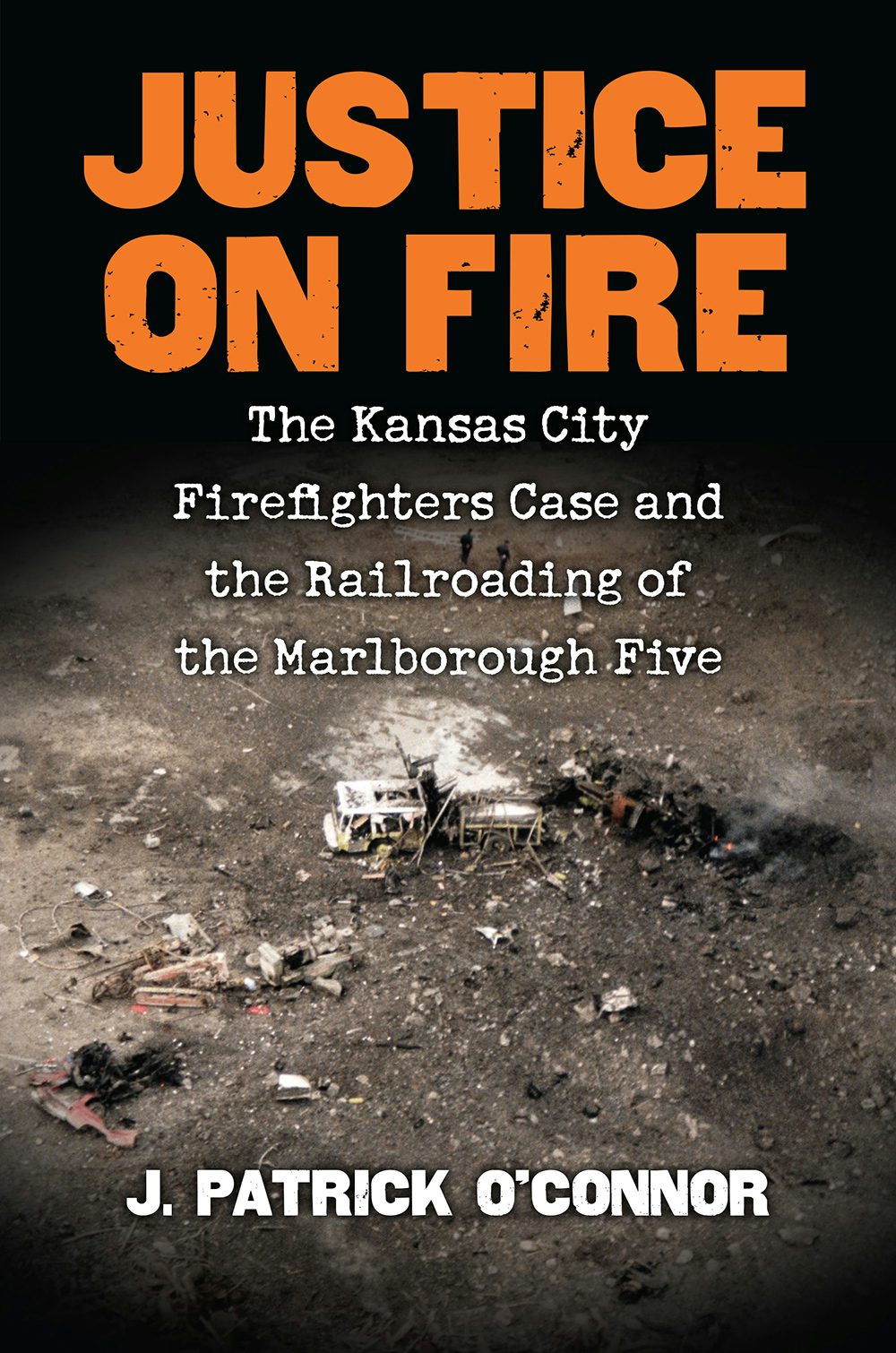
Railroaded Part II: The Firefighters Case

South Kansas City Blast Site 1988

South Kansas City Blast Site

Five innocent people were convicted in February 1997 in the deaths of six Kansas City firefighters in 1988.  These two stories run a total length of 20,000 words, and won the Missouri Bar Association's annual "Excellence in Legal Journalism" award. On Oct. 30, 1998, the 8th U.S. Circuit Court of Appeals denied the appeal in the Kansas City Firefighters case. Read the full opinion here and our analysis of the opinion. On Oct. 4, 1999, the U.S. Supreme Court declined to grant certiorari in the case.

by J.J. Maloney

[Editor's Note: to read more about this case go to http://kcfirefighterscase.com ]

Indictment and Trial

The ATF has four "National Response Teams" - teams which respond to disasters such as the Oklahoma City bombing - and Special Agent Dave True was leader of the Midwest team. He is a distinguished looking man with silver hair and mustache.

With 26 years of government service under his belt, True, who was in his early 50s, was ready to take retirement from the ATF and open the next chapter in his life, possibly as a consultant or a security executive for a corporation. There was a hitch, though. For more than eight years, the unsolved firefighters case had dogged him. As the ATF's top special agent in Kansas City, True didn't want to retire with the biggest case of his life hanging over his head, unsolved.

According to True's testimony at trial, the firefighter investigation was dead in the water by November, 1993. (For five years, True had maintained steadfastly that organized labor was responsible for the explosion.) Then he testified that he got a call from Captain Joe Galetti of the Kansas City Fire Department, who wanted True's help in getting the case on the "Unsolved Mysteries" television show, a last-ditch effort to solve the case.

In November, 1994, as the "Unsolved Mysteries" segment on the case was being prepared, True said he received a call from a witness saying Richard Brown had admitted to being involved in the explosion. "If there was a starting point for investigating the Marlborough area," True testified, "that was probably it."

Kansas City's Dirty Harry

Kansas City, Missouri

Kansas City, Missouri

In his book The Battle Behind the Badge, former police Cap. Robert Heinen portrays himself as a hero of mythic proportions in rooting out corruption in the Kansas City Police Department. He may have set out to get the bad guys, but in the process he became one himself.

by J.J. Maloney

Robert B. Heinen was a legendary and controversial Kansas City cop, almost from the time he joined the department in 1946 to his retirement in 1974. He played no small part in the downfall of Police Chief Joseph McNamara in 1976, now a respected national authority on crime and criminal justice.

In his book, The Battle Behind the Badge, Heinen portrays himself as a hero of mythic proportions. He bills the book, published in 1997 by Leathers Publishing, a local vanity press, as "The story of a police captain's struggle against corruption and political interference in the Kansas City department."

The book also depicts Heinen, a retired captain, to be a brutal, sadistic cop, who – with his badge as a shield – committed many, many felonies. The book further recounts that the upper echelons in the police department also took part in numerous crimes.

Did J. Edgar Hoover Blackmail Justice Abe Fortas?

US Supreme Court Justice Abe Fortas

US Supreme Court Justice Abe Fortas

Then a member of the Supreme Court, because Fortas was gay?  The evidence says yes.

By J.J. Maloney

Certain FBI documents raise not only the question of whether Abe Fortas, former justice of the U.S. Supreme Court, was gay, but whether J. Edgar Hoover successfully blackmailed Fortas, while he was a member of the Supreme Court.

In 1967, Hoover sent his trusted aide, Cartha DeLoach, to put the FBI’s knowledge of the accusation before Fortas – who was then a member of the Supreme Court.

The document in question contained allegations by a known homosexual that he had "balled" with Fortas. Fortas said the allegation was "ridiculous," but rather than throwing the FBI agent out of his office, Fortas expressed appreciation for the FBI’s delicate handling of the matter, and then went on to discuss a pending Supreme Court decision with DeLoach – a clear breach of Supreme Court etiquette.

Following are the documents in question. You judge for yourself.

Devil's Island

Devil's Island

Devil's Island

An essay on the history of the most famous and dreaded prison of all time.  Recommended reading for those who think a "get tough" policy on crime is a new idea, or that it works.

by J. J. Maloney

As American politicians embrace a continually tougher stance on crime -- demanding longer sentences and tougher conditions, in the belief that such measures will cure the problem of crime, we might want to reflect back on the toughest penal colony of all time, Devil's Island.

The average American convict takes a perverse pride in having served time in a maximum-security prison. To many men it is a rite of passage, just as having served in combat is a rite of passage for others.  Yet no American prison has ever been as tough as Devil's Island.

The most infamous prison in history, it was a desolate place of exile in French Guiana (Devil's Island was actually a small island off the coast of French Guiana, but the main prisons on the mainland, over time, became known collectively as "Devil's Island". Just as we have school children (and adults) who have never heard of Hiroshima, there are many more who have never heard of this most dreaded of all prisons.

During its existence as a penal colony (1884-1946), more than 56,000 prisoners were transported to French Guiana from France. Of this number, perhaps one-fourth returned to France. Many of those who evaded death in the jungle camps did so by escape—a feat that became increasingly difficult as the years passed.

In the Wake of a Riot

Missouri State Penitentiary in Jefferson City

Missouri State Penitentiary in Jefferson City

The story of the disastrous 1954 riot that leveled much of the Missouri State Penitentiary and left four convicts dead and 30 wounded.  One of the dead inmates was a police informant, and seven men were convicted of that murder - after claiming to have been tortured.  One legendary St. Louis defense attorney fought for 29 years at his own expense because he believed his client to be innocent.

by J. J. Maloney

On Sept. 22, l954, Donald DeLapp was a 19-year-old convict at the Missouri State Penitentiary in Jefferson City serving a four-year sentence for armed robbery. He was in solitary confinement on the third floor of E Hall, a dreary old cellblock originally constructed in l889.

The convicts had been through a brutally hot summer - farmers in Missouri still talk of the "drought of '54". Rats and other vermin crawled around the solitary unit. An occasional snake crawled up through the piping and dropped into the shower.

The convicts slept on straw tick mattresses which, as they aged, exuded a fine, powdery dust that hung in the aching heat, causing convicts to lay motionless on their bunks to avoid stirring up more dust. The sweat dripping from their bodies caused rivulets of mud.

The food, never good, reached a new low that day when rotten watermelon was served. DeLapp, the kind of guy who would later break his hands punching cement walls when frustrated, went off: "I broke the water pipe off my sink," DeLapp later said.

"When they came up to fix it I broke out and turned Hoover (William Hoover, 23) loose. One guard hit me over the head with a club, but I was just interested in getting the keys, and I ran down to the end to keep another guard from throwing the lever box" (which would lock all the doors remotely and keep the keys from working).

The convicts on E 3 were turned loose, then they captured the other two floors in the building, which allowed them into the prison proper.

The riot exploded like a bundle of gas soaked rags.

Pages

Subscribe to RSS - J. J. Maloney