Crime Magazine is about true crime: organized crime, celebrity crime, serial killers, corruption, sex crimes, capital punishment, prisons, assassinations, justice issues, crime books, crime films and crime studies.

 About  |  Advertise  |  Awards  |  Blogs  Books of NoteContact  |  Forums Links  | Newswire  |  Print  Store  |  Subscribe  |  Writer's Corner

Crime Books and Films

Mickey Machine Gun Is Back!

March 8, 2009

The Return of the Irish-American Gangster to the Silver Screen

The Return of the Irish-American Gangster to the Silver Screen

by Steven Gerald Farrell

When The Godfather was released in the early 1970s, it effectively created a myth of the virtually unbeatable Italian crime family for the American public that endured for the remainder of the century. The film also effectively eliminated all other white ethnic organized gangs from the silver screen, as well as from the public's eye. But Hollywood had its history wrong in this case: The Italian Mafia was never as invincible nor did the "families" always have everything their own way when it came to illegal activities. It wasn't until the close of the last century that the film industry began to expose the old-time hoods as being fallible and besieged on all sides from new criminal elements connected with newly arrived immigrant groups. The Cubans, Russians and the Colombian hoods, along with the longer established black and Mexican-American gangs, had begun to nibble away at the turf long controlled by the almighty Italian mob.

As the paradigm of the urban underworld began to shift to reflect the new realities of the global economy, another look at the past by historians and Hollywood is revealing that the Italian gang never had absolute power as it was once commonly believed. The Irish hoodlums were actually engaged in gangland activities years before the arrival of the Italians and the Irish also competed with the Italians up until recently.

The Raid in Teaneck

October 14, 2007

Ron Chepesiuk and Anthony Gonzalez's book, Superfly: The True Untold Story of Frank Lucas, American Gangster

The Raid in Teaneck is the prologue from Ron Chepesiuk and Anthony Gonzalez's book, Superfly: The True Untold Story of Frank Lucas, American Gangster. (A major movie about Lucas entitled American Gangster and starring Denzel Washington and Russell Crowe will be in theaters beginning Nov. 2, 2007.) The book investigates Lucas's life and criminal career and the claims to fame the movie makes about him. This includes Lucas's relationship with legendary Harlem gangster Bumpy Johnson, his connection to La Cosa Nostra, the money he made in the drug trade and the development of the Asian drug pipeline. Lucas's life as a government informant is also examined. Beginning Oct. 25, 2007, Superfly can be purchased from the web site franklucasamericangangster.com. A documentary is also available.

by Ron Chepesiuk and Anthony Gonzalez

The law enforcement raid came on a crisp, cold night in late January, 1975, without a high profile. No involved planning. No SWAT team. No large show of force. No TV cameras. There was plenty of man power, though: a task force consisting of 10 agents from Group 22 of the U.S. Drug Enforcement Agency and 10 New York Police Department detectives attached to the Organized Crime Control Bureau (OCCB).

The task force felt confident that it would face little resistance and certainly no bodyguards wanting to disrupt the raid and cause trouble. After all, it was the personal residence of the drug dealer and his family lived with him.

Group 22 had been investigating the Gambino crime family of East Harlem for some time, and now the long hours and hard work were about to pay off. In 1975 the Gambino family was one of the five families that ruled the powerful Italian American mob, La Cosa Nostra, and controlled organized crime in New York City.

Speaking Truth to Power

April 5, 2009

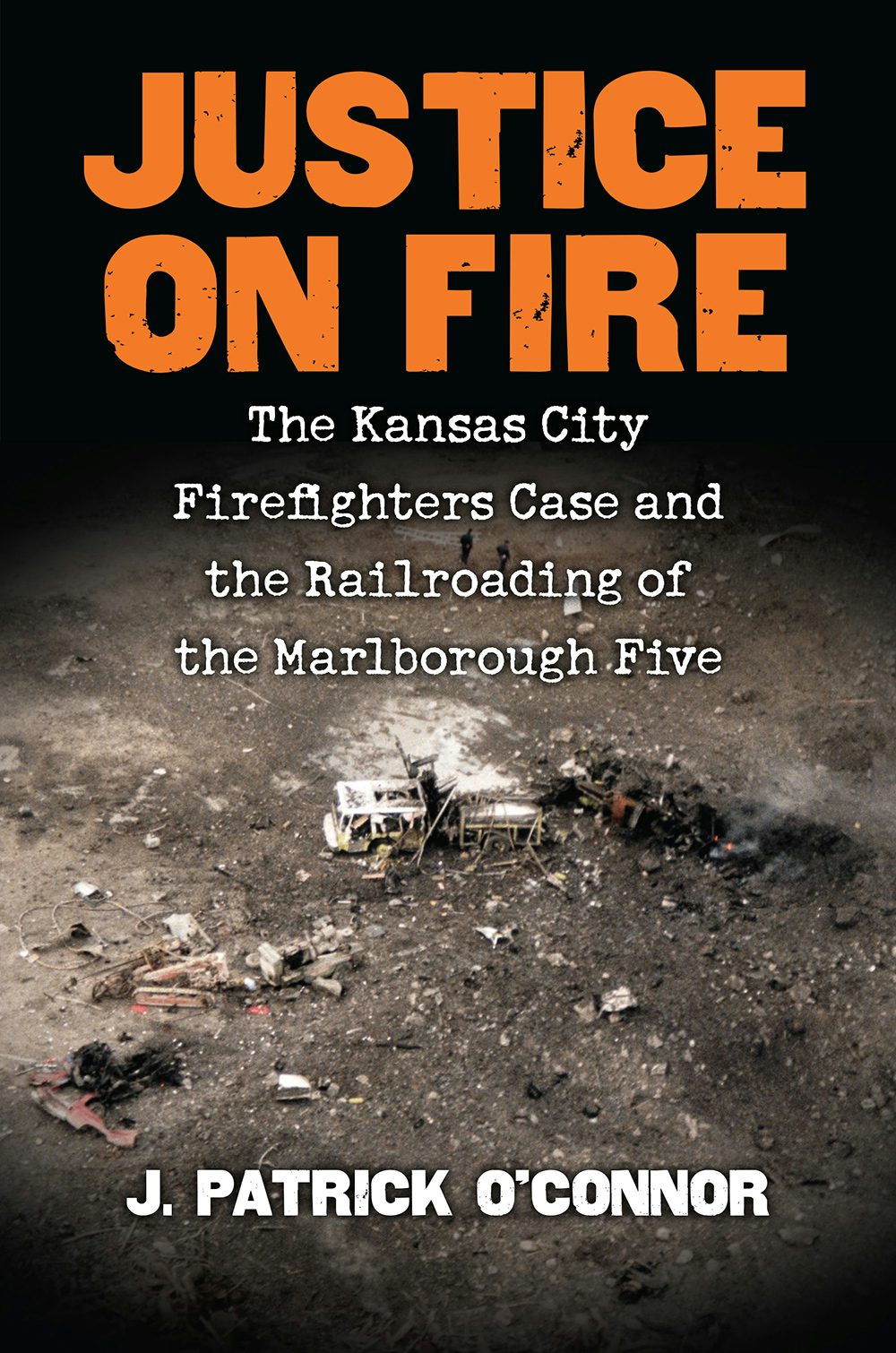
Bookcover: Jailhouse Lawyers by Mumia Abu Jamal

Mumia Abu-Jamal's 27 years on Death Row for a murder he did not commit would have turned almost anyone else into an embittered, defeated man. Instead, he has remained what he always was, "the voice of the voiceless," as he demonstrates yet again in his most recent book, Jailhouse Lawyers: Prisoners Defending Prisoners v. the U.S.A. (City Lights Books, 2009.)

 by J. Patrick O'Connor

Through hundreds of essays, radio commentaries and now six well-written, meticulously researched books, he has defied the walls that encase him to speak out against oppression. His voice his heard weekly throughout the United States on Pacifica Radio and his writings are read and admired throughout much of the world. From the bowels of Death Row, where 3,600 others languish in the United States, Abu-Jamal presses on for justice, day after day, year after year.

Jailhouse Lawyers: Prisoners Defending Prisoners v. the U.S.A. opens a tightly shut door into the operations of the U.S. penal system by chronicling the exploits of dozens of jailhouse lawyers – both men and women – who have fought the injustices the courts and the prisons have dealt them and their fellow prisoners. Their accomplishments, against all odds, have been incredible. Their story is a story never before told.

For the vast majority of the 2.3 million prisoners in the United States and for Abu-Jamal himself, the overriding, inescapable reality about the U.S. justice system is that the law is only what a judge says it is.

Book 'Em Vol. 18 - 29

April 12, 2009

True Crime: An American Anthology, edited by Harold Schechter

Crime Magazine's Review of True-Crime Books

Caught up in the immediacy of modern-day crime, which we can follow in all its horror millisecond-by-millisecond via the Internet, we shudder in real time over the spring 2009 mass shootings around America and over the trial of Josef Fritzl, the Austrian rapist who imprisoned his own daughter for 24 years and fathered her seven children. (Read more about this harrowing case in John Glatt's Secrets in the Cellar, covered in this column.) Current crimes have a way of eclipsing older crimes, which fade into history and feel, in retrospect, almost quaint. Well, they shouldn't — because life and death meant then what it still means now, and writers of other eras were just as skilled at invoking shock and horror as their modern counterparts. Another of the books in this column, True Crime: An American Anthology, proves this conclusively with gripping accounts of now virtually forgotten murders by some of the finest writers this country has ever produced, from Mark Twain to James Thurber and beyond.

by Anneli Rufus

Pages

Subscribe to RSS - Crime Books and Films