Crime Magazine is about true crime: organized crime, celebrity crime, serial killers, corruption, sex crimes, capital punishment, prisons, assassinations, justice issues, crime books, crime films and crime studies.
Justice Issues
The Firefighter Case: Part I
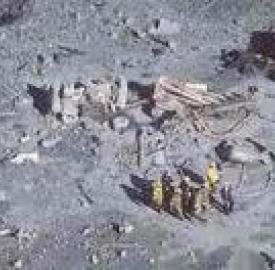
South Kanasa City Blast Site
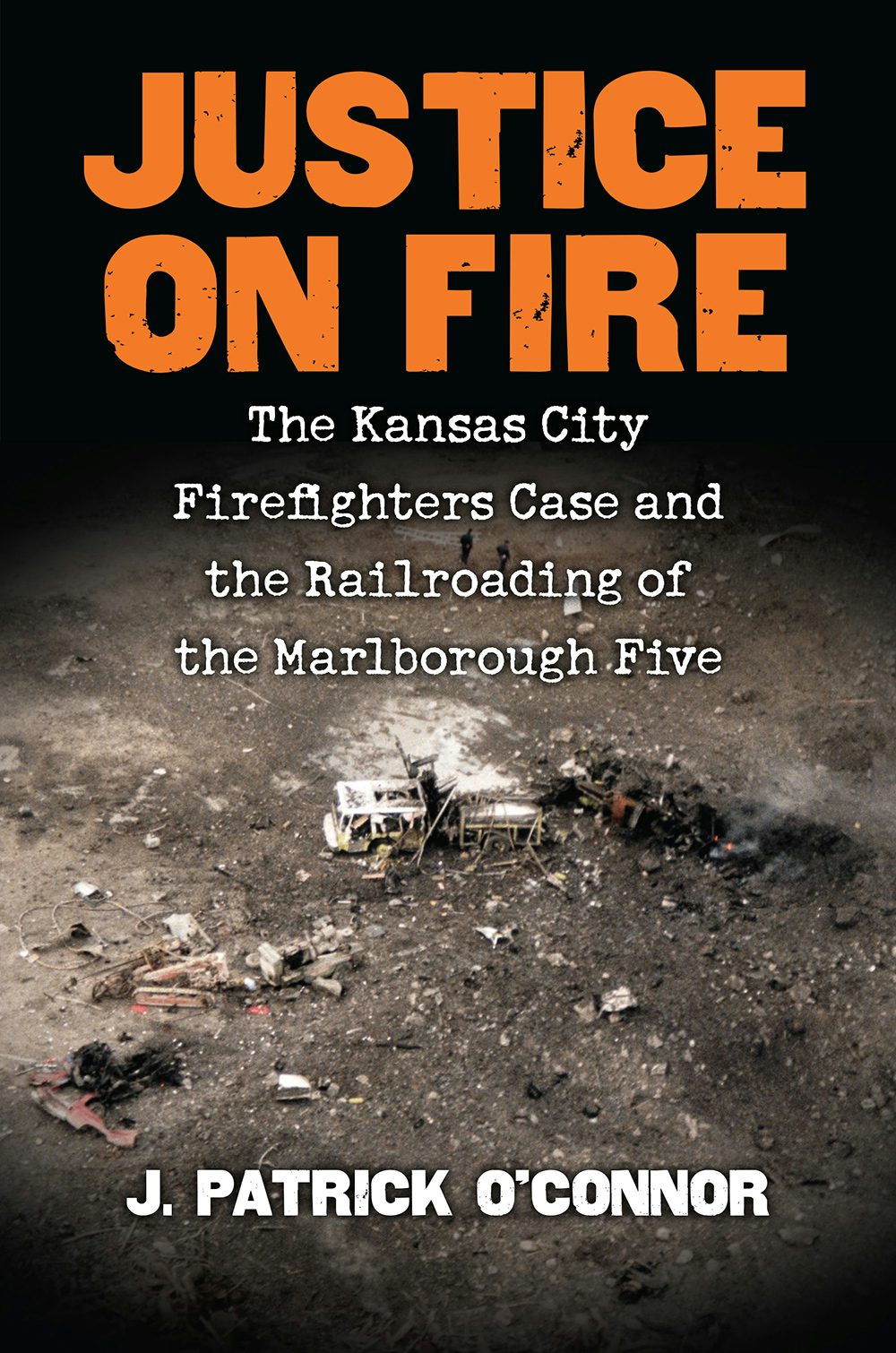
Five innocent people were convicted in February 1997 in the deaths of six Kansas City firefighters in 1988. These two stories run a total length of 20,000 words, and won the Missouri Bar Association's annual "Excellence in Legal Journalism" award. On Oct. 30, 1998, the 8th U.S. Circuit Court of Appeals denied the appeal in the Kansas City Firefighters case. Read the full opinion here and our analysis of the opinion. On Oct. 4, 1999, the U.S. Supreme Court declined to grant certiorari in the case.
by J.J. Maloney
- Read more
- 19578 reads
The Scottsboro Boys: Jim Crow on Trial
July 13, 2009

The Scottsboro Boys
The case of the Scottsboro Boys often seemed like one of dueling prejudices. Entrenched racism against blacks, anti-Semitism, the Madonna/Whore dichotomy, and regional stereotypes would all be on full display as the Scottsboro Boys grabbed headlines for well over a decade throughout the 1930s. It is a story of cowardice and heroism, of lies and manipulation, of fear and hatred, of caring and commitment, a story in which every facet of the human personality is seen in all its embarrassing weakness and glorious strength.
by Denise Noe
- Read more
- 37729 reads
DNA Evidence on Trial: The Curious Case of the Palmist and the “Catwoman”
May 16, 2011

Kathleen Marshall
Andrew Fitzherbert was convicted and sentenced to life in prison on the basis of DNA evidence alone. His case shows that it is often not the technology or the science but the supervising biologist’s subjective interpretation of the results that is the crucial factor in assessing whether a suspect sample and a crime-scene sample “match.”
by Mary Garden
On Friday, February 27, 1998, between 4 p.m. and 8 p.m., veterinarian Kathleen Marshall (subsequently dubbed the “Catwoman”) was murdered in the downstairs clinic of her home in Wilston, on Brisbane’s northside. Her decomposing body with 52 shallow stab wounds was not discovered until Sunday afternoon when two directors of the Cat Protection Society of Queensland (CPSQ), of which Marshall was president, visited her home. Sixteen cats and three dogs, unfed and distressed, were upstairs.
The police investigation initially focused on members of the CPSQ where power struggles and infighting had been a common occurrence, intensifying during the six months before 52-year-old Marshall’s death. In April, however, Ken Cox, a forensic biologist from the John Tonge Center, announced that he had found male blood in the crime-scene samples. Investigators decided to eliminate every male person involved in the deceased’s life, beginning with male members of the CPSQ and any male connected to a female member.
- Read more
- 12146 reads
Juror No. 7
Sept. 27, 2010 Updated Dec. 2, 2011

Gurparkash Singh Khalsa
The author’s account of her role as jury foreperson at a 2010 murder trial in Stockton, California.
by Joan Bannan
Ajmer Singh Hothi, a 23-year-old trucker from Jalandhar, India was shot and killed in the cab of his parked big rig in Stockton, California on March 27, 2007. The weapon that killed him was a 9mm handgun that discharged nine bullets into the cab – six of those into Ajmer’s body. The one that entered his heart killed him instantly. He had been in the United States for 10 years, primarily residing with his parents. His mother and sister, who were in great fear for his life, had not been able to reach him for a couple of hours so they drove to the yard where he parked his truck. They found his lifeless body and called 911.
Four days after the murder, the San Joaquin Sherriff’s Department arrested Gurparkash Singh Khalsa, the father of Ajmer’s former girlfriend, Kirin Pannu. Several months later, the evidence, all circumstantial, was sent to a grand jury. After the four-day grand jury session, Khalsa was indicted on the charge of first-degree murder.
Fifty-eight year-old Khalsa, a prominent member of the local Sikh community and owner of a local trucking firm, avoided trial for three years by changing attorneys. In March 2010, a jury was selected for Khalsa’s murder trial. I would become Juror No. 7.
- Read more
- 14696 reads
Cold Case: The Murder of Emmett Till
November 27, 2006 updated 3/12/07

Emmett Till
The brutal murder of 14-year-old Emmett Till in Mississippi in 1955 galvanized the fledging civil rights movement like no other killing of a black by white racists before it. After an all-white, all-male jury acquitted Till's two killers, the case festered for 49 years until the U.S. Justice Department reopened it in 2004. In late February of 2007, a Lefore County, Miss. grand jury declined to issue any new indictments, effectively bringing the case to an abrupt and ignoble end.
by Denise Noe
- Read more
- 29554 reads
Todd Matthews and The Doe Network: Naming the Nameless Dead
March 23, 2004

Who are they? These images are a sampling of unidentified victims profiled on The Doe Network.
There are thousands of unnamed corpses in the United States, so-called John and Jane Does who have turned up over the last few decades in woods, rivers, alleys and dumpsters without any identification. An Internet-based group of volunteers who call themselves The Doe Network is working to name the nameless.
by Lona Manning
Todd Matthews has always known where he belongs. His home is in the foothills of the Smoky Mountains in Tennessee, where the soft-spoken 33-year-old lives with his wife and two young sons. Home is where the ties to his past are as close as the quiet graveyard where his ancestors are buried. "I was born, live and work in a three-mile radius," Matthews explains. This may be why, he surmises, he is obsessed with helping people who are lost. Specifically, dead people who are lost.
Matthews's consuming passion is to investigate and identify "John Does," the anonymous corpses that are found in woods, rivers, by riverbanks, in alleys, and dumpsters throughout the country. There are over 5,400 John or Jane Does registered with the National Crime Information Center (NCIC), an FBI clearinghouse in West Virginia. There are thousands more cases -- nobody is sure how many -- reduced to a thin file folder, a box of bones in the evidence room, a nagging memory in the back of a retired detective's mind. Often, but not always, Does are the victims of foul play. Sometimes they took a wrong turn in life, becoming involved in drugs and crime. But, says Matthews, "No matter who they are, even no matter what they've done in life, you've got to think they're all God's children."
- Read more
- 9866 reads
Tainting Evidence: Inside the Scandals at the FBI Crime Lab
The FBI's vaunted crime lab is a scandal of atrocious forensic science. Its "junk science" permeates the U.S. criminal justice system as it bogus "findings" routinely punish the innocent and set the guilty free, affecting thousands of lives in the process.
by John F. Kelly and Phillip K. Wearne
Scientific crime solving or sci-crime – it is an image upon which much of the FBI's awesome reputation is based. Humans are fallible, are inclined to lie and are often motivated by anything but the truth. The history of crime fighting in the United States is littered with eyewitnesses who misidentified a suspect, defense lawyers who persuaded juries to find reasonable doubt, and suspects who had credible alibis. The physical evidence on the other hand is the silent, definitive witness. The traces of explosives on Timothy McVeigh's clothes in Oklahoma City, the bloody shoe-prints left by the killer of Nicole Brown Simpson and Ron Goldman in Los Angeles, the saliva traces recovered from the sealed envelope of a letter claiming responsibility for the bombing of the World Trade Center…all these offer certainty. And certainty equals proof.
The means of making physical evidence proof is forensic science, the application of science to legal processes, the application of science to crime-fighting. Together or apart, the words "forensic" and "scientific" are today commonly used as everyday adjectives that imply definitive, detailed and comprehensively argued. It is an image burnished by popular television detective series like "Quincy" and the coverage of big cases by Court TV, an image epitomized by the source of the country's most famous forensic science, the FBI's crime lab.
- Read more
- 17280 reads
Railroaded Part II: The Firefighters Case

South Kansas City Blast Site
Five innocent people were convicted in February 1997 in the deaths of six Kansas City firefighters in 1988. These two stories run a total length of 20,000 words, and won the Missouri Bar Association's annual "Excellence in Legal Journalism" award. On Oct. 30, 1998, the 8th U.S. Circuit Court of Appeals denied the appeal in the Kansas City Firefighters case. Read the full opinion here and our analysis of the opinion. On Oct. 4, 1999, the U.S. Supreme Court declined to grant certiorari in the case.
by J.J. Maloney
- Read more
- 12727 reads