Crime Magazine is about true crime: organized crime, celebrity crime, serial killers, corruption, sex crimes, capital punishment, prisons, assassinations, justice issues, crime books, crime films and crime studies.

 About  |  Advertise  |  Awards  |  Blogs  Books of NoteContact  |  Forums Links  | Newswire  |  Print  Store  |  Subscribe  |  Writer's Corner

Investigative Reporting

J. Edgar Hoover and the Framing of the Omaha Two Sticky

Dec. 28, 2011

Ed Poindexter

Mondo we Langa

Ed Poindexter Mondo we Langa

Ed Poindexter and Mondo we Langa, the leaders of the Omaha chapter of the Black Panther Party in the early 1970s, were framed for the murder of Omaha Police Officer Larry Minard as part of J. Edgar Hoover’s clandestine, illegal counterintelligence operation known as COINTELPRO that targeted Black Panther Party leaders all over the United States. Although neither man had any connection to the murder of the young officer, both remain imprisoned for life. 

by Michael Richardson

The murder of Omaha, Nebraska policeman Larry Minard over 40 years ago and the COINTELPRO-inspired investigation that followed landed two Black Panther leaders – Ed Poindexter and Mondo we Langa – in prison for life.  The scapegoats came to be known as the “Omaha Two.”  In order to pin the police officer’s murder on the two leaders of Omaha’s Black Panther Party, FBI Director J. Edgar Hoover gave a secret order to withhold a crime laboratory report on the identity of the anonymous caller that lured the 29-year-old policeman to his death.

Hoover directed the Federal Bureau of Investigation from 1924 to his death in 1972.  He also directed a secret, illegal, counterintelligence operation within the FBI from 1956 to 1971, codenamed COINTELPRO that targeted radical groups such as the Panthers, Students for a Democratic Society, and the American Indian Movement. COINTELPRO’s stated aim was to destabilize these groups by either murdering their leaders or getting them convicted of felonies. (COINTELPRO is an acronym for Counterintelligence Program.)

The Firefighter Case: Part I Sticky

South Kanasa City Blast Site

South Kanasa City Blast Site

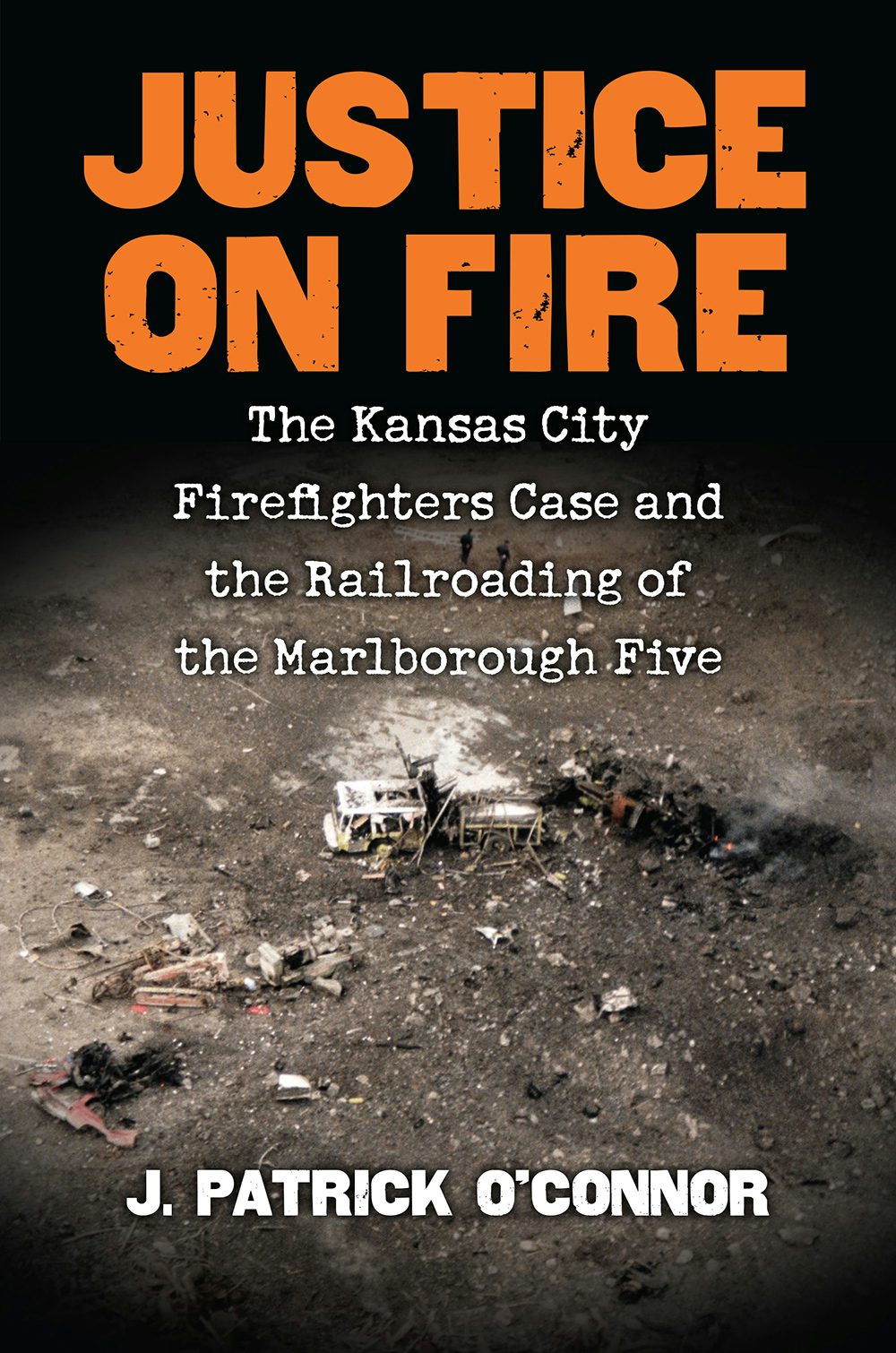
Five innocent people were convicted in February 1997 in the deaths of six Kansas City firefighters in 1988.  These two stories run a total length of 20,000 words, and won the Missouri Bar Association's annual "Excellence in Legal Journalism" award. On Oct. 30, 1998, the 8th U.S. Circuit Court of Appeals denied the appeal in the Kansas City Firefighters case. Read the full opinion here and our analysis of the opinion. On Oct. 4, 1999, the U.S. Supreme Court declined to grant certiorari in the case.

by J.J. Maloney

[Editor's Note: to read more about this case go to http://kcfirefighterscase.com ]

For many years Frank and Skip Sheppard were the Injun Joes of Marlborough - the down-on-its-heels neighborhood in southeast Kansas City where six firefighters were killed in an explosion Nov. 29, 1988. Like the character by that name in Tom Sawyer, they were perceived by many as evil characters in whose wake woe would surely follow.

These two brothers - large, forbidding Native Americans, scared people. When Skip Sheppard was in a car wreck that killed his fiancée and left him in a coma, some people said he deliberately drove in front of a truck to get rid of the fiancée.

So it's no surprise that Frank and Skip were among the early suspects in the firefighter case - and that Frank's girlfriend, Darlene Edwards, Frank's nephew Bryan Sheppard, and Bryan's best friend Richard Brown, would be included as well.

When the firefighter case had gone unsolved for eight years - and seemed incapable of being solved - these five became expendable.

D.B. Cooper – Myth or Man?

April 4, 2013

D.B. Cooper

In November 1971 the only unsolved hijacking in U.S. history occurred when an unidentified suspect commandeered a commercial jetliner and held its occupants for ransom. The case evolved into an American legend almost overnight because, as the authorities maintain, the culprit escaped by skydiving from the tail of the jetliner mid-flight with the ransom money tied around his waist. If that wasn’t machismo enough it was also reported that he had bailed out at 10,000 feet into a nasty winter storm over impassable mountain terrain at night while wearing only a lightweight overcoat, business suit and slip-on loafers; or did he?....

by David Keller

Introduction

On Thanksgiving day back in 1971 America woke up to the telling and retelling of the astonishing exploits of an innovative and daring outlaw that the world would soon come to know as D.B. Cooper. The now infamous extortionist had actually provided the name Dan Cooper as he commenced his dramatic plan to hijack a commercial airliner and hold its passengers and crew for ransom. The debonair initials were errantly submitted by a correspondent under pressure to make deadline and by the time the discrepancy had been discovered the swooning American public had heard it so often that retraction was pointless; besides the court of public opinion had already ruled that D.B. imparts a certain mystique befitting a death defying swindler.

The news broadcasts continually replayed what little information they had; that the previous day an unidentified man who had given the name Cooper to the airline ticket agent had gone on to boldly extort $200,000 in cash from Northwest Orient Airlines. He then evaded capture by leaping from the tail of the jetliner mid-flight with the cash tied around his waist. If that wasn’t machismo enough, it was soon learned that the brazen skyjacker had bailed out at 10,000 feet into a nasty winter storm, over impassable mountain terrain, at night, wearing a lightweight overcoat, a business suit and a pair of slip on loafers. As they sat down to roast turkey, cranberry sauce and pumpkin pie, Americans across the nation saved room for all the makings of what would soon become a modern day American legend.

The Great Pretender

March 28, 2013

Dr. Donald C. Arthur

Dr. Donald C. Arthur parlayed a number of bogus academic degrees into an extremely successful career in the U.S. Navy, rising all the way to surgeon general of the Navy. He even had the nerve to wear a combat action ribbon as part of his official uniform at his retirement in 2007 despite never having been involved in combat. 

by Michael Volpe

The book Stolen Valor was released with some fanfare in 1998.  It detailed a bevy of individuals who falsely claimed combat action, especially during the Vietnam War. Since then, the Stolen Valor team, led by B. G. Burkett, has gained a reputation for exposing hucksters who falsely claim to have been in combat. Those individuals include Brian Leonard Creekmur, who falsely claimed to be a Navy Seal and sniper. Another individual exposed by the Stolen Valor team was Bill Hillar. Hillar falsely claimed to be a Green Beret and wound up being sentenced to 21 months in prison as a result.

In 2005, the Stolen Valor team began investigating Dr. Donald C. Arthur, then the surgeon general of the U.S. Navy. That’s because Dr. Arthur was seen wearing a combat action ribbon as part of his official uniform at his retirement in 2007 even though there was no record he’d seen combat.

Black Power, the “Third Man,” and the Assassinations of Bermuda’s Police Chief and Governor

Feb. 18, 2013

To avoid race riots and the resulting negative impact on tourism, a succession of Bermudian government administrations has whitewashed the assassinations of Bermuda’s governor and police chief in the early 1970s by a radical black-power group known as the Black Beret Cadre.

by Mel Ayton

During 1972 and 1973 the North Atlantic British colony of Bermuda, which had become a playground for vacationing Americans, was suddenly thrust into a climate of fear when a spate of murders, including political assassinations, occurred. Bermuda became the only British territory ever to have the Queen’s representative murdered in cold blood and the first nation to suffer the violent effects of the importation of 1960s’ American Black Power militancy.

The tragic events of the early 1970s had been viewed by many Bermudian politicians as a stain upon Bermuda’s reputation as a haven for travellers and an island of tranquillity. This attitude prompted them to ignore the Black Power connection to the assassinations lest further investigations stir up trouble between the races and provoke island-wide riots. Political leaders were also afraid that the truth about the murders and the instability of its political system, which the killings exposed, would damage Bermuda’s tourist industry which was its principle source of income.

Additionally, political leaders were embarrassed that a militant Marxist revolutionary organization, the Black Beret Cadre, which had been widely supported by many young Bermudians, was connected to the killings. The Black Berets, usually never attaining a membership of more than 100, modelled themselves on the American Black Panthers. In fact, many of its members had close connections with Black Panthers in the United States. Although two black Bermudians allied with the Berets were tried and executed for the murders, the weak response of the government in establishing a wider conspiracy effectively swept the whole affair under the carpet.

The Case for Ted Kuhl’s Innocence

Feb. 11, 2013

Ted Kuhl

In 1997, Ted Kuhl was convicted and sentenced to 40 years in prison for murdering his girl friend, Janet Nivinski, in Loves Park, Illinois. Reporter Harriet Ford presents the case for his innocence.

by Harriet Ford

Just after midnight on December 6, 1996, Janet Nivinski, a 28-year-old, blue-eyed blonde, was murdered beside her car in the parking lot of a strip mall in Loves Park, Illinois, a small township located outside Rockford, Illinois in Winnebago County. The bullet that killed her was fired assassination style, six inches from her head.

During the last week of Janet’s life, she had been investigating a discrepancy at Amcore Bank, where she was responsible for transferring large sums of money overseas. She spoke to a male friend about it. She was disturbed and said, “I can’t say what it is right now, but something is not right at the bank.” A bank employee was fired that week. Police interviewed him and dismissed him as a suspect. 

An unknown man also stalked Janet a few weeks before her death. A neighbor woman became suspicious and jotted down the license number of his car, but this number was lost –one of several pieces of possible evidence to be misplaced.

Janet and her best friend Christa Peterson were planning to fly to California together in January. Janet’s boyfriend, 48-year-old Ted Kuhl, surprised the two women with plane tickets, which he had purchased for them, possibly as an early Christmas gift.

The Beverly Hills Supper Club: The Untold Story Behind Kentucky’s Worst Tragedy

Dec. 31, 2012

An excerpt from The Beverly Hills Supper Club: The Untold Story Behind Kentucky’s Worst Tragedy by Robert D. Webster. This is the true untold story of what led to Kentucky’s worst tragedy – a story of greed, corruption, deceit, mafia rule, government cover-ups, kidnapping, and even murder. In fact, this book details what should now be considered as the worst case of mass murder in United States history.

by Robert D. Webster

Introduction

It seems to me it was a Wednesday night. I may be wrong, but I think that’s when I received a telephone call that persuaded me to begin a project that would completely consume the next five years of my life. The man introduced himself as David Brock, but I certainly didn’t know who he was. In search of an author, he had been given my name and telephone number by the staff at the Kenton County Public Library in Covington. I had written two other books and dozens of smaller articles on local history, and he was told that I might be the person to talk to. Before 30 seconds had elapsed in the call, he posed his simple question: “Would you be interested in writing another book?”

Thoughts quickly went through my mind, “Oh my gosh. If I start yet another book and spend more countless hours locked in my office, my wife’s going to leave me.” I had just finished a book detailing the history of the many movie theaters that had once graced the streets of our Northern Kentucky neighborhoods. In fact, my office was still filled with clutter left behind after months of necessary research for the publication. I had to admit, however, I was more than a little curious as to the topic. I had always been interested in local history and maybe this gentleman had a good idea. I asked, “What about?” His reply: “The Beverly Hills Supper Club fire.”

At first, I thought I had dodged a bullet. While I didn’t know everything there was to know about the fire, I certainly knew there had already been quite a lot written on the subject. The story was more than 30 years old, yet it was a topic that remained extremely familiar to residents throughout the region. Also, there had been very little written about the club’s early history and that greatly intrigued me. The place was a speakeasy in the 1920s, serving illegal alcohol during the Prohibition era. From the late 1930s to the early 1960s, it was one of the largest illegal gambling casinos in the entire Midwest – owned and operated by members of the Cleveland syndicate. A concise account of the club’s entire history might prove to be a great seller. However, the Beverly Hills Supper Club is best known for one particular event.

Pages

Subscribe to RSS - Investigative Reporting