Crime Magazine is about true crime: organized crime, celebrity crime, serial killers, corruption, sex crimes, capital punishment, prisons, assassinations, justice issues, crime books, crime films and crime studies.

 About  |  Advertise  |  Awards  |  Blogs  Books of NoteContact  |  Forums Links  | Newswire  |  Print  Store  |  Subscribe  |  Writer's Corner

Investigative Reporting

What Watergate Was All About

April 15, 2007

Howard Hughes in the 1940s with his new Boeing Army Pursuit Plane in Inglewood, California.

Howard Hughes in the 1940s with his new Boeing Army Pursuit Plane in Inglewood, California.

In the early years of the Nixon presidency, billionaire Howard Hughes bribed Nixon with $100,000 in cash. When Hughes's secret lobbyist Larry O'Brien became Democratic Party chairman, Nixon had O'Brien's phone at the Watergate tapped to find out if he knew about the bribe.

by Don Fulsom

"I am determined to elect a president of our choosing this year and one who will be deeply indebted, and who will recognize his indebtedness. Since I am willing to go beyond all limitations on this, I think we should be able to select a candidate and a party who knows the facts of political life … If we select Nixon, then he, I know for sure knows the facts of life." – Howard Hughes, early in the 1968 presidential campaign.

In the annals of disastrous U.S. political payoffs, nothing is ever likely to top Howard Hughes's $100,000 gift to President Richard Nixon. That's because Nixon's subsequent paranoia over the illegal contribution led, in large measure, to the Watergate burglary and its cover-up – which, of course, ultimately forced Nixon to evacuate the White House just steps ahead of his eviction in August 1974. One month later, a presidential pardon from his handpicked successor and loyal old friend, Gerald Ford, likely saved Nixon himself (some 40 Nixon administration officials were jailed for Watergate crimes) from spending any time behind bars.

In the early years of Nixon's presidency, power-hungry, episodically nutty billionaire Howard Hughes secretly bribed his favorite corrupt politician with $100,000 in cold cash. The money was skimmed from a Hughes gambling casino in Las Vegas – "siphoned like a sip of champagne from the Silver Slipper," according to a later account by columnist Jack Anderson.

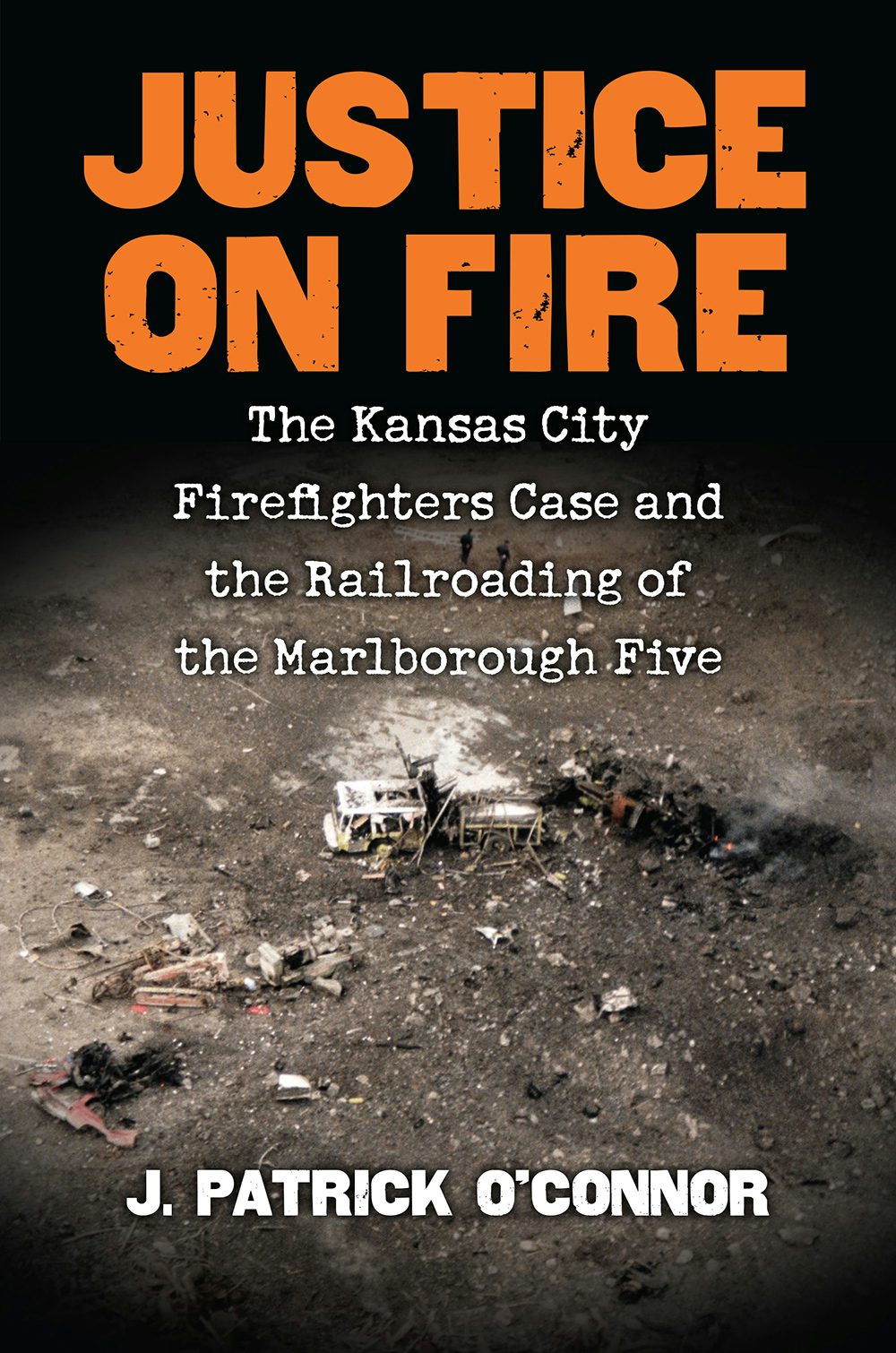
Railroaded Part II: The Firefighters Case

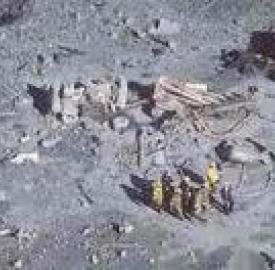
South Kansas City Blast Site 1988

South Kansas City Blast Site

Five innocent people were convicted in February 1997 in the deaths of six Kansas City firefighters in 1988.  These two stories run a total length of 20,000 words, and won the Missouri Bar Association's annual "Excellence in Legal Journalism" award. On Oct. 30, 1998, the 8th U.S. Circuit Court of Appeals denied the appeal in the Kansas City Firefighters case. Read the full opinion here and our analysis of the opinion. On Oct. 4, 1999, the U.S. Supreme Court declined to grant certiorari in the case.

by J.J. Maloney

[Editor's Note: to read more about this case go to http://kcfirefighterscase.com ]

Indictment and Trial

The ATF has four "National Response Teams" - teams which respond to disasters such as the Oklahoma City bombing - and Special Agent Dave True was leader of the Midwest team. He is a distinguished looking man with silver hair and mustache.

With 26 years of government service under his belt, True, who was in his early 50s, was ready to take retirement from the ATF and open the next chapter in his life, possibly as a consultant or a security executive for a corporation. There was a hitch, though. For more than eight years, the unsolved firefighters case had dogged him. As the ATF's top special agent in Kansas City, True didn't want to retire with the biggest case of his life hanging over his head, unsolved.

According to True's testimony at trial, the firefighter investigation was dead in the water by November, 1993. (For five years, True had maintained steadfastly that organized labor was responsible for the explosion.) Then he testified that he got a call from Captain Joe Galetti of the Kansas City Fire Department, who wanted True's help in getting the case on the "Unsolved Mysteries" television show, a last-ditch effort to solve the case.

In November, 1994, as the "Unsolved Mysteries" segment on the case was being prepared, True said he received a call from a witness saying Richard Brown had admitted to being involved in the explosion. "If there was a starting point for investigating the Marlborough area," True testified, "that was probably it."

The Shame of Lorain, Ohio

December 6, 2002 Updated: April 17, 2011 

Nancy Smith, center, with her four teenage children.

Nancy Smith, one of two people wrongfully convicted in this case 15 years ago, was released on bail February 4, 2009 pending a resentencing hearing.)

 The ritual abuse hysteria that swept across the United States in the 1980s and early 1990s resulted in hundreds of innocent people being wrongfully convicted of committing a bizarre concoction of sexual acts on preschoolers. Most of those convicted were eventually freed from prison on appeal, but some innocent people remain behind bars. One of the most blatant cases of wrongful conviction occurred in Lorain, Ohio. There a politically ambitious prosecutor's office coaxed and manipulated a few Head Start preschoolers into testifying that they had been sexually abused repeatedly over a six-month period by their bus driver and some stranger -- two people who never even knew each other, but who are now serving life prison terms for crimes that never occurred in the first place.

by Lona Manning

In a stunning reversal, Nancy Smith and Joseph Allen have been ordered back to prison to resume their lengthy sentences after two years of freedom. This past January, the Ohio Supreme Court overturned Court of Common Pleas Judge James Burge’s February 2009 ruling that set them free from their living nightmare. Smith and Allen remain free for the time being while the decision is appealed.

Lorain County Prosecutor Dennis Will contends that he had to appeal Judge Burge’s action to a higher court because the precedent set by Judge Burge would have allowed thousands of others to appeal their sentences as well. Smith’s lawyer found a clerical error in her sentencing order, which led to Judge Burge’s decision to set aside their sentences. Lorain County successfully argued that Judge Burge had no authority to free them and should have merely corrected the error. While Prosecutor Will still maintains that Smith and Allen were guilty of heinous crimes against children, Judge Burge became convinced of the pair’s innocence after reviewing their case.

Judge Burge told the Chronicle Telegram that because of the ruling he has no alternative but to send two innocent people back to prison. “I never thought I would witness anything quite so tragic in the criminal justice system, much less be any part of it,” the judge said.

The dramatic twists and turns in the case have finally reawakened media interest. In recent weeks, Rachel Dissell of the Cleveland Plain Dealer has reported that:

 Lorain Police Chief Cel Rivera, who was involved in investigating the case, admitted to Nancy Smith’s daughter that he now doubts Smith’s guilt; the long-suppressed video of the police line-up of Joseph Allen demonstrates that children were coached to finger Allen; (click here for (part 2) and (part 3) of the video); one of Allen’s child accusers now says he has doubts that he was molested.

Smith’s and Allen’s lawyers have vowed to continue to fight on behalf of their clients and the Ohio Innocence Project is also investigating the case.

The Murder of JonBenét Ramsey

May 7, 1999 Updated 8/30/06 and 07/20/08 and 1/30/13

JonBenet Ramsey

by J. J. Maloney & J. Patrick O'Connor

Related Story: Solving the JonBenet Case by Ryan Ross. (04/14/03)


Editor's Note:

The Boulder Daily Camera reported on January 27, 2013 that the Boulder Grand Jury convened in the murder of JonBenet Ramsey voted in 1999 to indict both John and Patsy Ramsey on charges of child abuse resulting in death in connection with the events of Christmas night 1996 at the Ramsey home in Boulder. Former Boulder First Assistant D.A. Bill Wise confirmed the grand jury's vote. The Daily Camera quotes him saying, "It names both of them, John and Patsy Ramsey."

The indictment on child abuse resulting in death, when charged as "knowingly or recklessy," is a Class II felony in Colorado that carries a sentence of four to 48 years. The statute of limitations on that charge in Colorado is three years from the date of the crime. The vote for the indictment was in October of 1999, over two months before the statute of limitations would have taken effect.

Then D.A. Alex Hunter refused to sign the indictment, presumably because he did not believe there was sufficient evidence to win a courtroom conviction. There is no doubt that the completely botched crime scene would have enabled the defense to put up strong resistance to any allegations advanced by the prosecution.

On the other hand, in refusing to sign the indictment, Hunter did not follow the Colorado statute governing grand jury practices. The statute stipulates that "every indictment shall be signed"  by the foreman of the grand jury and the prosecuting attorney. As University of Colorado Law School Professor Mimi Wesson told the Daily Camera, the proper legal procedure would have been for Hunter to sign the indictment -- also know as a true bill -- file it with the court and then move in open court to dismiss the charges. "That would be the more transparent and responsible course, in my opinon," she said.

Rather than follow the dictates of the statute pertaining to grand jury matters, Hunter kept it secret that indicments had been handed down. Instead of going for transparency, as advocated by Professor Wesson, Hunter elected to keep the deep suspicion the grand jurors had for JonBenet's parents from the public. Upon disbanding the grand jury, which had met for the previous 18 months, Hunter held a news conference on October 13, 1999 where he issued this statement: "I and my prosecution task force believe we do not have sufficient evidence to warrant a filing of charges against anyone who has been investigated at this time."

"We don't know who did what," one of the grand jurors interviewed by the Daily Camera said, "but we felt the adults in the house may have done something that they certainly could have prevented, or they could have helped her, and they didn't."

After 28 years as Boulder's district attorney, Hunter retired in 2001. When it came out that the grand jury had voted to indict the Ramseys, he refused to comment on the revelation.

Stan Garnett, who became Boulder D.A. in 2009, said shortly after taking office that he was returning the Ramsey case, which his predecessor, Mary Lacy, had taken over from the Boulder Police Department, back to the police. "The Ramsey case is one of the cold cases we would take great satisifaction in solving and filing and pursuing in court," he said.


Previous Update


On July 9, 2008, Boulder County District Attorney Mary Lacy stated that DNA tests conducted by Bode Technology Group revealed that skin cells left behind on JonBenet Ramsey's long underwear point to a killer other than the girl's parents, John and Patsy Ramsey, or her brother, Burke. Mrs. Ramsey died of ovarian cancer in 2006 at age 49.

"To the extent that we may have contributed in any way to the public perception that you might have been involved in this crime, I am deeply sorry," Lacy wrote in an exoneration letter to John Ramsey, who now has remarried and lives in Michigan. "No innocent person should have to endure such an extensive trial in the court of public opinion."

Early in the investigation into the 6-year-old pageant star's brutal murder on Christmas night in 1996, Lacy said that Boulder police discovered male DNA in a drop of blood on JonBenet's underwear that did not match any members of JonBenet's immediate family. The tests conducted by Bode Technology Group, Lacy said, revealed the same DNA that was found previously in the drop of blood was present in three places on JonBenet's long underwear.

Lacy stated that Boulder investigators now hope they'll eventually find a DNA match in the ever-expanding national DNA databank, a sentiment echoed by John Ramsey. "I think the people that are in charge of the investigation are focused on that, and that gives me a lot of comfort," Mr. Ramsey said in an interview with a Denver TV station. "Certainly we are grateful that they acknowledged that we, based on that, certainly could not have been involved."

Even if a DNA match is eventually made, it does not mean that the DNA from this contaminated crime scene will reveal it to be that of JonBenet's killer, although it possibly could. For now, all that is known, is that it is not the DNA of John, Burke, or the late Patsy Ramsey. In the meantime, the JonBenet case will continue unsolved and will remain one of the most botched crime investigations in the annals of U.S. law enforcement.


The brutal murder of 6-year-old JonBenet Ramsey on Christmas night in 1996 shocked America to its core. Just as the Lindbergh baby kidnapping and murder seven decades earlier had seared the nation's consciousness, this murder – of a beautiful and talented child in a wealthy Boulder, Colo., home – renewed every parent's worst nightmare: No child was truly safe, not even tucked in at home on Christmas night.

JonBenet's murder – particularly as the days went by and no arrests were forthcoming – quickly became a national obsession, featured day after day on network news, television tabloid programs, talk radio, newspapers and magazines. Her image flitted across television screens innumerable times, often showing her in a fancy red cowgirl outfit, singing "I want to be a cowboy sweetheart," or dancing across the stage in a glittering Las Vegas showgirl outfit, complete with heavy makeup. Her unusual first name became so well known that like Cher and Madonna she no longer had need of a last name.

The public's shock at the murder soon began to share equal time with its growing dismay at the Boulder police's investigation, a dismay fed by a steady stream of leaks from the Boulder County District Attorney's office about the inept police investigation being conducted. For one thing it became known that the police had badly botched the initial investigation by failing to seal off the crime scene. For another it appeared the police were treating the primary suspects – JonBenet's parents – with kid gloves by not only acquiescing to their refusal to be interviewed at police headquarters, but also to being interviewed separately. Fueled with such information, the media, especially the tabloid television and talk radio shows, were showing no such restraint toward the glamorous child's parents, John and Patsy Ramsey. Some in the media began to point the finger directly at her father. Others implied it was her mother who had garroted the girl. Some speculated the crime had to have been committed by both parents. The tabloids even raised the possibility that her brother Burke, who was just shy of 10-years-old at the time, murdered JonBenet.

Pages

Subscribe to RSS - Investigative Reporting