David Lohr

David Lohr is a feature writer for the Discovery Channel, where he heads up the Criminal Report, a true crime site that gives readers a daily dose of the latest and most probing investigations. He gained national prominence in 2003 when a long-elusive serial murderer read one of his articles about the decades-long mystery of Wichita, Kansas's "BTK" Killer. After reading Lohr's account of the unsolved crimes, Dennis Rader made some key modifications to the story-based on his first-hand knowledge and mailed his edited version to the media, along with evidence that he was the BTK Killer. Two years later, the seemingly upstanding Rader confessed to murdering 10 people between 1974 and 1991. For more information visit: www.davidlohr.net

Night Stalker

November 5, 2003

Richard Ramirez

Richard Ramirez was a spineless, gutless punk who terrorized Los Angeles for five months in 1985. His frenzied nighttime murder spree of random targets was as senseless and pointless as his life.

by David Lohr

Richard Ramirez's random and inexplicable murder spree began on June 28, 1984, in Glassel Park, Calif., a small suburban community in Los Angeles. He parked his car down the street and quietly made his way up to a two-story apartment building. His eyes began scanning the area looking for an easy target. A heat wave was moving through the area, so he had little trouble finding an apartment with an open window. The open window he chose belonged to 79-year-old Jennie Vincow.

Murder was the farthest thing from his mind at the moment. He was more interested in stealing the woman's valuables to support his growing drug addiction. With gloved hands, he quietly removed the screen from the window and crawled inside. According to Philip Carlo's 1996 book, The Night Stalker, Ramirez immediately made his way to the bedroom and began looking through the drawers, careful not to make a sound. Nothing. There was not one thing of value for him there. He became enraged at the elderly woman sleeping on the bed and decided to take his anger out on her. He quietly removed his hunting knife from its sheath and made his way toward her bed. He stood over her momentarily and contemplated his next move. Killing was something new to him and he did not want to make any mistakes. He held the knife up high and quickly brought it down on her chest. She immediately awoke and began screaming for her life, but he ignored her cries and continued to stab her again and again. After he tired of stabbing her, he placed his hand over her mouth and with one quick flick of the knife slit her throat. It was suddenly over just as quickly as it began. The elderly woman was dead and her killer stood over her panting. The act had excited him beyond his expectations and the thrill of the kill aroused him sexually. He quickly disrobed and performed necrophilia on the corpse.

Richard Speck

August 20, 2003

Richard Speck

Speck's murders of eight young women -- all in nurse's training and rooming together in a quiet apartment house on Chicago's Southside -- stands as one of the most horrific and shocking crimes in U.S. history. During the mayhem of the killings, a ninth student nurse wedged herself under a bed and went undetected. Her description of the intruder with the "Born to Raise Hell" tattoo on his arm, led to Speck's capture. Her testimony at trial got him the death sentence. Murdering women was nothing new to Richard Speck. He had done it often before.

by David Lohr

On the Sunday morning of July 14, 1966, residents on South Chicago's East 100th Street were suddenly awakened by a woman's screams. As local residents ran outside, they were shocked to notice a young woman standing on the second story ledge of a small townhouse unit. According to George Carpozi's 1967 book, The Chicago Nurse Murders, the young woman, Corazon Piezo Amurao, began shouting: "Help me! Help me! Everyone is dead … Oh God … he's killed them all!" she cried out.

Just then, one of the onlookers noticed a Chicago police car turning onto the street and quickly flagged the patrolman down. Officer Daniel R. Kelly of the South District Station noticed the girl balancing dangerously on the edge of the apartment building and immediately pulled off to the side of the street and jumped out of his patrol car. "You mustn't jump," he yelled. "Stay right there. I'll come inside and help you."

As Kelly made his way through the apartment he made a startling discovery. Just to the left of the front door was the body of a nude woman sprawled out on a couch. Kelly immediately ran over to check the young girl's vitals, but it was too late. Her body was cold to his touch -- she had been dead for several hours. Uncertain what he was getting into, Kelly drew his service revolver and made his way up a narrow flight of stairs. Once at the top of the stairway, he immediately noticed a pair of feet sticking out of a doorway into the hall. As he made his way towards the doorway, he made another startling discovery. A half-nude young woman was lying on her back; slash marks were visible on her neck and breasts. The girl was obviously dead and so Kelly continued to make his way down the hall. Then, just a few feet from the second woman's body, Kelly looked into a bedroom and discovered three more girls' bodies strew about the room. Their wrists were bound and all three appeared to have had their throats slashed.

Ted Bundy: The Poster Boy of Serial Killers

October 6, 2002

Ted Bundy

Ted Bundy didn't have it all but he had most of it: good looks, charm, smarts, and ambition. He could have been anything he wanted to be. Instead he became the poster boy for serial killers, killing as many as 40 young women and girls as young as 12 years old during a four-year rampage in the mid 1970s. He was so mainstream that the Washington State Republican Party hired him, so cunning that twice he escaped from jail, and so dashing a figure that women sent marriage proposals to him on death row.

by David Lohr

Mention the term "serial killer" and Ted Bundy's name is frequently the first to pop into mind. Before he was executed in 1989, he admitted to murdering 40 young women in almost a dozen states during his four-year reign of terror in the mid-'70s. In the process he became one of the most feared and prolific serial killers in U.S. history. But what sets Bundy apart is how different he was from the stereotype of the homicidal madman: He was so mainstream that the Washington State Republican Party hired him, so cunning that he twice escaped from jail, so dashing a figure that women sent marriage proposals to him on death row.

What caused Ted Bundy to snap and murder countless young women and girls as young as 12 years old for no apparent reason? The devil is in the details. Many of his early victims bore a physical resemblance to Bundy's first girlfriend, who was tall and slender and wore her long brown hair with a part in the middle.

Bundy was born Theodore Robert Cowell on November 24, 1946, in Burlington, Vermont. Bundy's mother, Eleanor Louise Cowell, was unmarried and just 22-years-old at the time of his birth. Bundy's father, Lloyd Marshall, apparently wanted nothing to do with him, so he and his mother moved to Philadelphia to live with her parents. In an unusual twist, Eleanor's parents, out of fear that their daughter would be criticized for having a bastard child, raised Bundy as their own son, leaving him to believe that his mother was his older sister.

Boy Killer: John Wayne Gacy

The site of Gacy's home in Des Plaines, Ill., where Gacy buried the bodies of 28 of the known 33 teenage boys he murdered. (Gacy's home on this site was leveled by the authorities following the discovery of the mass graves beneath it.)

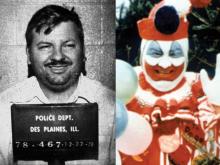
Serial killer John Wayne Gacy was a born salesman with a natural charm. Kids loved him, parents trusted him, First Lady Rosalyn Carter posed in a picture with him. All the while, over a seven-year period, he sexually assaulted and murdered 33 teenage boys and young men, burying 28 of them under his house and garage in a Chicago suburb.

by David Lohr

Not many people who knew him would have suspected that John Wayne Gacy, a respected member of the Junior Chamber of Commerce in Des Plaines, Ill., a performing clown at neighborhood children's parties, a precinct captain in the local Democratic party, and the owner of his own contracting business would come to be known as one of the most prolific serial killers in U.S. history.

Nor would his childhood in any particular way set off red flags that a monster was in the making. Gacy, a middle child, was born in Chicago in 1942 into a blue-collar family. He had two sisters, one two years older and the other two years younger. According to the book Killer Clown, by Terry Sullivan and Peter Maiken, Gacy seemed to have a regular childhood with the exception of his turbulent relationship with his father, John Wayne Gacy Sr. The authors describe the father as an unpleasant, abusive alcoholic prone to physically and verbally assaulting his children. The authors describe Gacy as deeply loving his father and wanting desperately to gain his approval and attention, but failing to win him over.

The Molalla Forest Killer

Dayton Leroy Rogers

For serial killers, prostitutes make easy targets. Dayton Leroy Rogers bound and stabbed to death at least eight of them before his rampage ran its course.

by David Lohr

In the early morning hours of August 7, 1987, serial-killer Dayton Leroy Rogers picked up his last prostitute victim, 26-year-old Jenny Smith. He drove her into the parking lot of a small business complex in Clackamas County, a small suburb of Portland, Ore.

Rogers was known by prostitutes for his odd behavior and bondage fetishes; it probably came as no surprise to Smith when he asked her to remove her clothes and bound her hands with a restraint fashioned from a shoe lace. He then began to cut her back and breasts with a knife. Smith screamed in horror. Rogers then shoved the knife into her vagina and began to stab her uncontrollably. Suddenly, the restraint gave way and Smith fell out onto the pavement. Bleeding profusely from her wounds, she tried to escape. Rogers quickly got out of the truck and grabbed her by the neck. He threw her to the ground and continued to stab her over and over.

Syndicate content