Crime Magazine is about true crime: organized crime, celebrity crime, serial killers, corruption, sex crimes, capital punishment, prisons, assassinations, justice issues, crime books, crime films and crime studies.

 About  |  Advertise  |  Awards  |  Blogs  Books of NoteContact  |  Forums Links  | Newswire  |  Print  Store  |  Subscribe  |  Writer's Corner

Innocence Cases

J. Edgar Hoover and the Framing of the Omaha Two Sticky

Dec. 28, 2011

Ed Poindexter

Mondo we Langa

Ed Poindexter Mondo we Langa

Ed Poindexter and Mondo we Langa, the leaders of the Omaha chapter of the Black Panther Party in the early 1970s, were framed for the murder of Omaha Police Officer Larry Minard as part of J. Edgar Hoover’s clandestine, illegal counterintelligence operation known as COINTELPRO that targeted Black Panther Party leaders all over the United States. Although neither man had any connection to the murder of the young officer, both remain imprisoned for life. 

by Michael Richardson

The murder of Omaha, Nebraska policeman Larry Minard over 40 years ago and the COINTELPRO-inspired investigation that followed landed two Black Panther leaders – Ed Poindexter and Mondo we Langa – in prison for life.  The scapegoats came to be known as the “Omaha Two.”  In order to pin the police officer’s murder on the two leaders of Omaha’s Black Panther Party, FBI Director J. Edgar Hoover gave a secret order to withhold a crime laboratory report on the identity of the anonymous caller that lured the 29-year-old policeman to his death.

Hoover directed the Federal Bureau of Investigation from 1924 to his death in 1972.  He also directed a secret, illegal, counterintelligence operation within the FBI from 1956 to 1971, codenamed COINTELPRO that targeted radical groups such as the Panthers, Students for a Democratic Society, and the American Indian Movement. COINTELPRO’s stated aim was to destabilize these groups by either murdering their leaders or getting them convicted of felonies. (COINTELPRO is an acronym for Counterintelligence Program.)

The Firefighter Case: Part I Sticky

South Kanasa City Blast Site

South Kanasa City Blast Site

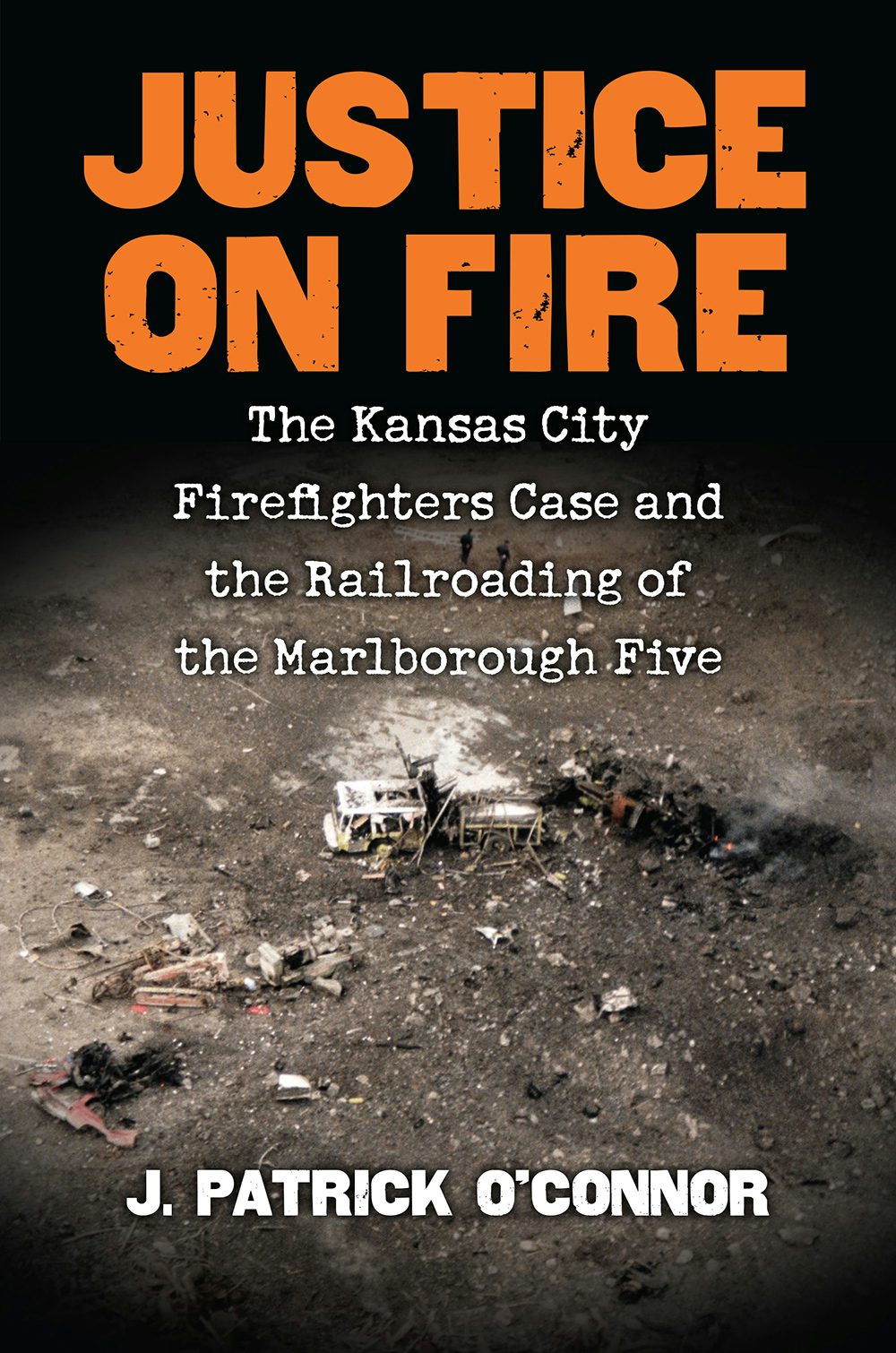
Five innocent people were convicted in February 1997 in the deaths of six Kansas City firefighters in 1988.  These two stories run a total length of 20,000 words, and won the Missouri Bar Association's annual "Excellence in Legal Journalism" award. On Oct. 30, 1998, the 8th U.S. Circuit Court of Appeals denied the appeal in the Kansas City Firefighters case. Read the full opinion here and our analysis of the opinion. On Oct. 4, 1999, the U.S. Supreme Court declined to grant certiorari in the case.

by J.J. Maloney

[Editor's Note: to read more about this case go to http://kcfirefighterscase.com ]

For many years Frank and Skip Sheppard were the Injun Joes of Marlborough - the down-on-its-heels neighborhood in southeast Kansas City where six firefighters were killed in an explosion Nov. 29, 1988. Like the character by that name in Tom Sawyer, they were perceived by many as evil characters in whose wake woe would surely follow.

These two brothers - large, forbidding Native Americans, scared people. When Skip Sheppard was in a car wreck that killed his fiancée and left him in a coma, some people said he deliberately drove in front of a truck to get rid of the fiancée.

So it's no surprise that Frank and Skip were among the early suspects in the firefighter case - and that Frank's girlfriend, Darlene Edwards, Frank's nephew Bryan Sheppard, and Bryan's best friend Richard Brown, would be included as well.

When the firefighter case had gone unsolved for eight years - and seemed incapable of being solved - these five became expendable.

The Scottsboro Boys: Jim Crow on Trial Sticky

July 13, 2009

The Scottsboro Boys

The Scottsboro Boys

The case of the Scottsboro Boys often seemed like one of dueling prejudices. Entrenched racism against blacks, anti-Semitism, the Madonna/Whore dichotomy, and regional stereotypes would all be on full display as the Scottsboro Boys grabbed headlines for well over a decade throughout the 1930s. It is a story of cowardice and heroism, of lies and manipulation, of fear and hatred, of caring and commitment, a story in which every facet of the human personality is seen in all its embarrassing weakness and glorious strength.

by Denise Noe

Is the Suffolk Strangler Still at Large?

April, 25, 2013

 Steve Wright

The murders of five prostitutes by the Suffolk Strangler in 2006 set off one of the largest manhunts in British history. DNA evidence led to the arrest and conviction of a man who admitted he had sex with four of the five dead women, but was he the actual serial killer? 

by Siobhan Patricia Mulcahy

During November and December of 2006, five prostitutes were murdered one at a time in Ipswich, England. Although each was asphyxiated and not strangled, the British media dubbed the serial killer “the Suffolk Strangler.” 

Forensic evidence suggested that all five victims were attacked from behind and that the assailant put his arm across the victims’ throats to render them unconscious. The first two bodies were found fully or partially clothed in a nearby river in Ipswich. The last three victims were left naked in woodlands near the same area; no attempt had been made to hide or bury the bodies. Each victim was arranged in the form of a crucifix with her hair extended outwards in the form of a halo. Jewelry and other trinkets were taken from the victims but have never been recovered.

The victims were 19-year-old Tania Nicol, 25-year-old Gemma Adams, 24-year-old Anneli Alderton, 29-year-old Annette Nichols, and 24-year-old Paula Clennell. Clennell, the fifth and final victim, had predicted her own murder during a television interview about the serial killer. She had been friends with the other victims as they worked the same streets touting for passing trade.

At the time of the murders, Suffolk police asked the Forensic Science Service to assist in one of the largest murder manhunts in British history. From the time Tania Nicol was reported missing on November 1, 2006, the police investigation involved 600 officers from nearly every law enforcement force in Great Britain. The inquiry team received more than 12,000 calls from members of the public and almost 11,000 hours of closed-circuit TV footage were scrutinized.

The Case for Ted Kuhl’s Innocence

Feb. 11, 2013

Ted Kuhl

In 1997, Ted Kuhl was convicted and sentenced to 40 years in prison for murdering his girl friend, Janet Nivinski, in Loves Park, Illinois. Reporter Harriet Ford presents the case for his innocence.

by Harriet Ford

Just after midnight on December 6, 1996, Janet Nivinski, a 28-year-old, blue-eyed blonde, was murdered beside her car in the parking lot of a strip mall in Loves Park, Illinois, a small township located outside Rockford, Illinois in Winnebago County. The bullet that killed her was fired assassination style, six inches from her head.

During the last week of Janet’s life, she had been investigating a discrepancy at Amcore Bank, where she was responsible for transferring large sums of money overseas. She spoke to a male friend about it. She was disturbed and said, “I can’t say what it is right now, but something is not right at the bank.” A bank employee was fired that week. Police interviewed him and dismissed him as a suspect. 

An unknown man also stalked Janet a few weeks before her death. A neighbor woman became suspicious and jotted down the license number of his car, but this number was lost –one of several pieces of possible evidence to be misplaced.

Janet and her best friend Christa Peterson were planning to fly to California together in January. Janet’s boyfriend, 48-year-old Ted Kuhl, surprised the two women with plane tickets, which he had purchased for them, possibly as an early Christmas gift.

Myopia at Scotland Yard – Murder on Wimbledon Common

Dec. 3, 2012

Rachel Nickell, Andre, and Alex in park
Rachel Nickell, Andre Hanscombe and their son Alex in the park

Not even Scotland Yard’s famed Murder Squad is immune from locking in on one suspect to the exclusion of all others and allowing its conceit to permit a serial rapist and murderer to stay at large for years after the evidence to convict him was in the police’s hands.

by Mark Pulham

In the photograph, her smile is wide and bright. A blue sky is behind her and she squints slightly from the sun as a wisp of blonde hair drifts across her face in a breeze. She seems incredibly happy. In another photograph, she and her boyfriend smile at the camera, bundled up against the chill. Between them is the buggy holding their young son.

Some people just radiate happiness, people who are attractive and put a smile on the face of those who saw them, even if they didn’t know the person.

Rachel Nickell was one of those people. Bright, attractive, and with boundless generosity, she was instantly likeable, and was capable of achieving anything that she set out to do.

Rachel Jane Nickell was born on November 23, 1968 to Andrew Nickell, an officer in the army, and his wife Monica, and brought up in Great Totham, a village near Colchester in Essex.  From a very young age, Rachel was naturally charitable, helping out with the elderly and with the disabled children in the area.

When she turned 11, Rachel went to the Colchester High School for Girls, and in her spare time, she joined the Essex Dance Theatre and took up singing, dancing, and acting. She could have pursued this course, but instead, decided to study and get a degree in History and English.

Rachel Nickell
Rachel Nickell

Rachel got a job at a Richmond swimming pool as a lifeguard, and it is there, in 1988, that she met a young motorcycle courier named Andre Hanscombe. The couple fell in love, and a year later, Rachel gave birth to her son, Alexander Louis. Rachel and Andre never married, and there is no indication that they were even thinking about it.

Rachel decided to stop working, at least for then, and devoted herself to being a full-time mother, even though she had been offered work as a photographic model. Maybe when Alex was old enough, she would pursue her ambition to be a children’s television presenter, an ambition in which she no doubt would have excelled.

The young family moved to Balham, in South London, and life seemed perfect. Wimbledon is also in South London. Known throughout the world for hosting the world’s most prestigious tennis tournament, people flock there in the summer to watch the matches and eat strawberry cream tarts at the afternoon teas in the pavilions.

But tennis is not the only thing the area is known for.

Justice on Trial

Aug 13, 2012

The statue of Lady Justice at Dublin Castle

The statue of Lady Justice at Dublin Castle

Justice on Trial is a landmark study of prosecutorial misconduct conducted by the Northern California Innocence Project at Santa Clara University School of Law and released in October of 2010.

In 2007, a California Court of Appeal set aside the murder conviction of Mark Sodersten because a Tulare County deputy district attorney had improperly withheld from the defense audiotapes of his interviews with a key witness.

The Appeals court personally listened to the tapes and concluded they contained dramatic evidence pointing to Sodersten’s innocence. Based on this finding, the court vacated his conviction. “This case,” the court declared, “raises the one issue that is the most feared aspect of our system—that an innocent man might be convicted.”

For Sodersten, however, the ruling came too late. He had died in prison six months earlier, after spending 22 years behind bars. The prosecution had sought the death penalty, but the jury sentenced him to life without parole.

The ruling was one of 707 cases of prosecutorial misconduct uncovered in a year-long investigation by the Northern California Innocence Project (NCIP) at Santa Clara University School of Law.

The investigation, made public October 4, 2010  is the most in-depth statewide review of prosecutorial misconduct in the United States.

Pages

Subscribe to RSS - Innocence Cases