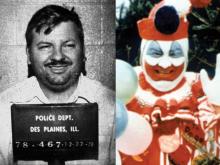
Henry Lee Lucas
Henry Lee Lucas is frequently touted as the ultimate serial killer, because he ultimately claimed to have killed more than 600 people. This in-depth story, by Bonnie Bobit, editor of the Death Row series of books, not only brings Lucas into sharp focus, but explains why the Texas board of pardons and paroles recommended that his death sentence be reduced to life imprisonment -- the only such instance of mercy by that board in modern times.
by Bonnie Bobit
For several years during the mid-1980s, Henry Lee Lucas enjoyed holding the title of "the most infamous man on death row." His fleeting fame did not evolve from the three cold-blooded murders he did commit, but from hundreds of murders he did not. When Lucas was sentenced to death in 1984, it wasn't for the 1960 murder of his mother. Nor was it for the 1982 cold-blooded rape and murder of Kate Rich, an 82-year-old Texas woman. And it wasn't even for the 1982 murder and dismemberment of Becky Powell, his longtime girlfriend. Instead, Lucas was sent to death row for the 1979 rape and murder of a woman known only as "Orange Socks" – a woman he probably never met.
After Lucas served 10 years in prison for the murder of his mother, he was released on parole free to kill again. And he did. During Lucas' second murder trial, in 1983, he shocked a Texas courtroom when he not only confessed to killing the elderly Rich, but then announced: "And I've got 100 more out there somewhere."
Following news reports of Lucas' outburst, detectives and investigators from 19 states lined up to interview him while a special task force worked around the clock to help lawmen solve more than 600 murders that Lucas would eventually confess to.
Lucas' general attitude was summed up in an early jailhouse interview, "I didn't have no feelings about killing (him). It was just like I drink a glass of water."
As Lucas confessed to murder after murder, closing more than 200 cases, real murderers were left undisturbed.
What made so many well-trained investigators err so many times? Denton County, Tex., Sheriff Weldon Lucas once offered, "He can make an interviewer believe anything."
But why would any man admit to murders he did not commit? For Lucas, it was a game — a game in which he was winning.
Mommy's Dearest
Henry Lee Lucas was born on Aug. 23, 1936, in the back woods of Virginia, near a small community named Blacksburg in the Appalachians. He lived with his family in a two-room log cabin with dirt floors. His alcoholic parents brewed moonshine whiskey, and his mother, Viola, ruled her family with an iron rod, often forcing her children to work on the still.
His father, Anderson, gained the nickname "No Legs" in a drunken spree that resulted in his losing both of his legs in a freight train accident. Afterwards, he occasionally sold pencils on street corners while Viola turned tricks for extra cash. Lucas had eight brothers and sisters, many of whom were farmed out over the years to institutions, relatives, and foster homes. For some reason, Viola kept Henry at home. She often beat him, along with his father, occasionally forcing them to watch her sexual endeavors with strangers. Sickened by one such episode, Anderson dragged himself outside to spend the night in the cold where he contracted a fatal case of pneumonia.
When Lucas entered school in 1943, Viola sometimes sent him off in a dress and ringlets — and always shoeless. When Lucas returned home from school one day wearing a pair of shoes his teacher had given him, Viola severely beat him for accepting the gift.
As a teenager, he reported having sex with his half-brother and with animals whose throats they slit first. At 17, one of Lucas' brothers accidentally struck him in the left eye with a knife. He suffered at home for several days until someone finally took him to a doctor who removed the eye and replaced it with prosthetic glass.
Crime and Punishment
As Lucas grew older, he became bitter and distant. Malnourished and uneducated, he never developed an ability to assign value to life. He spent his teen years in and out of jail, beginning in 1954 when he was arrested for a string of burglaries near Richmond, Va. Lucas was sentenced to six years in the Virginia State Prison, but on Sept. 14, 1957, he escaped from a road gang and fled to his older sister's home in Tecumseh, Mich. Three months later, he was recaptured and returned to Virginia where he attempted another escape a month later. This time he was caught the same day. Despite the two escapes, Lucas was released on Sept. 2, 1959, one year early. He went back to live with his sister in Tecumseh where he was plagued by calls from his mother, insisting that he return to live with her in Virginia. When he refused, Viola followed him to Michigan.
Deadly Revenge
On the night of Jan. 11, 1960, Lucas and his mother went to drink at a local bar. "I was pretty well drunk when she started arguing with me, wanting me to go back to live with her to Virginia, but I told her I didn't want nothing to do with her," Lucas remembers more than 20 years later.
When they left for home, still arguing, they took the dispute to an upstairs bedroom and railed at each other into the early hours of the following morning. At one point, Viola hit Lucas with a broom. He struck back with a knife. When the fight was over, 74-year-old Viola was dead. The next day, she was found on the bedroom floor with a fatal stab wound in her neck. Lucas, who was immediately suspected, was nowhere to be found.
Five days later, he was spotted in Toledo, Ohio.
"I was picked up by a state trooper and he said I looked kinda funny with a big, heavy coat on. He said, ‘Well, you just look suspicious, ya know,'" Lucas recalled during an American Justice interview more than 30 years later.
While running a routine check, the trooper learned that the heavily clad visitor was wanted in Michigan on a murder charge. When Lucas was locked up, he confessed to murdering his mother and raping the corpse. Lucas wrote in a statement: "I had a knife in my hand, but I do not know if the blade was opened or closed. I do not know if I got the pocketknife from my pocket or just had it in my hand. When I hit her with the knife, she fell to the floor, and I looked at the knife in my hand and the blade was open."
He later recanted the jailhouse confession, telling his defense attorney Carol Durst that after he stole the car, he had a change of heart because he was worried about his mother. Thinking she was only injured, he decided to go back and help her; he was returning to the scene when the trooper stopped him.
Whether or not anyone believed that claim, Lucas had confessed to stabbing Viola. In his pocket, police found a pocketknife consistent with the murder wounds. That was enough to prosecute Lucas.
In March 1960, Judge Rex Martin presided over the trial held in the nearby town of Adrian, Mich. Since Lucas had confessed, the defense did not dispute that he had killed his mother. Instead, the issue at trail was the degree of sentencing: Was he guilty of first-degree murder or manslaughter?
Durst argued that the crime was committed without premeditation, malice, or intent to kill. To help make its case, the defense put Lucas on the stand. In court, he calmly repeated the story he had told police, although now, he couldn't remember hitting his mother with a knife. Lucas showed no sign of emotion or remorse, and his attorneys grew weary of his cold-blooded nature. Durst revealed that Lucas told her he liked knives and would use them to cut up small animals like cats and mice. "So that was something he seemed to think was fun to do," Durst concluded.
Despite their concerns, the defense tried to foster sympathy from the jury by detailing Lucas' harsh upbringing that warped his perception of the world. Both his brother, Ray, and sister, Opal, testified to growing up in Virginia amid poverty and abuse.
Lucas said, "I've got gashes in the back of my head. I've got black and blue marks on my body from being beaten every day. If I didn't do something she wanted, I got beaten." He said his mother abused him not only physically, but emotionally as well.
The jurors had sympathy for the way Lucas was raised, but didn't think he killed his mother by accident. They compromised, handing down a verdict of second-degree murder. When it was announced in court, Lucas had no reaction.
He was sent to Jackson State Penitentiary in southern Michigan. A social worker there met Lucas and observed "a very inadequate individual with feelings of insecurity and inferiority." After two attempted suicides, Lucas was transferred to a mental facility and paroled in 1970 after serving 10 years.
Shortly after his release, Lucas was jailed again — this time for trying to kidnap two teenaged girls. He was sent back to his old cellblock where he lived until he was 39. After his release in August 1975, he became a drifter.
Lucas Meets Toole
As Lucas traveled from town to town, his only ambition was to stay alive while avoiding the law. His success was short-lived. While in Jacksonville, Fla., Lucas stopped at a soup kitchen where he shared a meal with Ottis Toole, a part-time transvestite with a penchant for arson. They became quick friends, and, according to Toole, lovers. Soon Lucas moved in with Toole, at his mother's home where Toole's young niece, Becky Powell, also lived. Lucas and the preteen girl quickly grew close.
Powell, diagnosed with a mild case of mental retardation, hungered for kindness and companionship. She got both from Lucas, and in her eyes, he was somebody important. Her devotion to Lucas fed his weak psyche, one filled with low self-confidence and esteem. She was the first person who ever made him feel special.
In 1981, Toole's mother died and the three of them were forced to move out of the house. Along with Becky, they began roaming the interstates. When Lucas and Toole finally split up, Lucas took Becky with him and headed west. In May 1982, the pair ended up in Ringgold, Tex., near the Oklahoma border. They moved in with octogenarian Kate Rich, whose family quickly became suspicious and kicked Lucas and Powell back out onto the street. Then they met Ruben Moore.
The House of Prayer
Moore, a roofer and part-time minister, brought them to his Stoneburg, Tex., House of Prayer, an abandoned chicken ranch with makeshift living quarters for drifters and lost souls. Lucas and Powell settled there, passing themselves off as husband and wife, although Lucas was now 45 and Powell still a teenager.
Lucas once said, "That was the best part of my life. I built myself an apartment there and worked as a roofer on Moore's crew. I bought a car and had what furniture I could buy for the house. I had a TV and stuff like that."
But Powell, who was homesick and wanted to go back to Florida, convinced Lucas to leave. On Aug. 23, 1982, Moore took them to a truck stop and said good-bye. The following evening, Lucas returned to The House of Prayer in tears. He told Moore that Powell had jumped into a passing truck and left him. Lucas resumed his life on the old ranch. No one ever heard from Powell again.
The Confessions Begin
One month later, the elderly Rich turned up missing, and the Montague County sheriff's office started an investigation that quickly led to Lucas, who denied any involvement.
In June 1983, Lucas was arrested on a weapons charge and held in the Montague County jail. After five days without cigarettes and coffee, Lucas was ready to confess to anything. He wrote a note from his jail cell: "To Whom It May Concern, I, Henry Lee Lucas, to try to clear this matter up, I killed Kate Rich on September last year. I have tried to get help so long and no one will help. I have killed for the past 10 years and no one will believe it."
In his statement, Lucas said that he picked up Rich to go to church, but instead, drove around for a while. He then got the urge to kill her and have sex with her corpse. So he drove to an oil field and stabbed her to death. He dragged her down an embankment and then had sex with the body before stuffing it in a culvert and leaving. Later, he returned to the oil field and brought her body back to his apartment. To destroy the evidence, he stuffed the body into a stove that sat in his yard and burned her over a two-day period.
When Lucas finished his statement, he told investigators there was something else he wanted to get off his chest. Out of the blue, he confessed to killing Powell, who was still thought to be alive.
Evidence Is Found
During the investigation at The House of Prayer, human bone fragments and ashes were found in the wood-burning stove. Rich's daughters identified their mother's eyeglasses that were found in the yard. The crime scene corroborated Lucas' story, and witnesses had seen Lucas with Rich on the day she disappeared. He was charged with first-degree murder.
Meanwhile, he offered details on the Powell murder. Lucas told investigators that when he and Powell left the House of Prayer, they argued while trying to get a ride. He said the argument began when Powell said she wanted to go back to Jacksonville. Lucas refused because of an outstanding warrant for his arrest there. Just before reaching Denton, they decided to get some sleep in an empty field off the road. Powell didn't survive the night.
Lucas took investigators to the scene and described what happened next. "So we went back first to that little tree over there as you go off on the road...and we kept arguing, cussing at each other, and...she hauled off and hit me upside the head, and that was it. That's when I hit her with the knife. I just picked it up off the blanket, brought it around, hit her right in the chest with it. And she just sorta sat there for a little bit and then dropped over, ya know. I cut her up into little teeny pieces and stuffed her into three pillows... I stuffed all of her in there except her legs."
Two weeks after the murder, Lucas said he went back to bury the body parts. During the confession, he said that he loved Powell, but ended up killing her because of problems he had all his life.
Skeletal remains were found to be those of a white girl around the same height, weight, and age of Powell. Lucas was again charged with murder.
The Trials
In June 1983, during the arraignment for the Rich case, the judge asked Lucas if he understood the charges. He said he did and admitted his guilt. He then went on to tell the judge that he had murdered a hundred women. Lucas quickly became front-page news.
During the trial that resulted in a 75-year sentence, the streets of Montague County became a feeding frenzy for the media. Police from all over the country called the sheriff, hoping that Lucas was the key to unsolved murders in their area.
During the media extravaganza, Lucas went on trial for the Powell murder. His defense again argued the killing was unintentional, and that he hit her with a knife before he had time to think. In front of the jury, Lucas sobbed and said he loved Powell and didn't want her dead.
But, the defense had to deal with Lucas' videotaped confession, which included the following statement: "I had sex, intercourse with her. It's one of those things that I guess got to be part of my life, having sexual intercourse with the dead."
It took the jury only two hours to hand down the stiffest possible penalty for the crime — life in prison. After the verdict was read, Lucas got up, shook hands with the prosecutor, smiled at him and said, "You did a good job."
The Confessions
After the trial, Lucas began confessing to other murders all over the country. He originally offered a list of 77 women from 19 different states. He wrote detailed descriptions of the women and drew sketches next to some of their names. As he confessed to more and more murders, the details became increasingly more bizarre. Some included dismemberment, necrophilia, even cannibalism.
Lawmen from all over the country were requesting samples of Lucas' saliva, fingerprints, and hair. One investigator said that at one point in time, they ran out of pubic hair to get from Lucas to send to people.
Lucas said he picked up most of his victims along the interstates, offering a ride and sometimes dinner or a drink. "Just about everyone I pick up, I kill ‘em. That's the way it always turn out."
Lucas said he killed his victims to have sex with them; "... to me a live woman ain't nothing. I enjoy dead sex more than I do live sex."
During one interview, Lucas said Toole had helped him commit many of the highway killings. Toole, whom investigators found serving time in Florida for arson, readily backed up Lucas' claims.
Toole told Florida investigators, "We picked up lots of hitchhikers, you know, and Lucas killed most of the women hisself, and some of them would be shot in the head and the chest, and some of them would be choked to death, and some of them would be beat in the head with a tire tool."
The six-foot-tall, snaggle-toothed criminal said that when he dressed up like a woman, he could get plenty of people to come and ride with him and Lucas.
As the investigations continued, Lucas's own estimate of his victims soon grew to more than 600. In the fall of 1983, investigators from 19 states gathered in Louisiana to swap information on Lucas and Toole.
At the end of the sessions, lawmen linked the two men to 81 murders, and many cases were soon closed.
Williamson County
One of the victims Lucas confessed to killing was "Orange Socks," an unidentified woman found in a culvert wearing only red-orange socks. This case resulted in a capital charge for Lucas, and in late November 1983, Jim Boutwell, the sheriff of Williamson County in central Texas, brought Lucas to his jail to await trial. Boutwell had been anxious to talk to Lucas about a string of unsolved murders in his county on Interstate 35, and, according to Lucas, the sheriff assured that he would keep him happy during the investigation.
A task force was set up there to handle all the inquiries coming in about Lucas from around the country. Here, Lucas was the center of attention. When he wasn't talking face-to-face with an officer, he was in the task-force office on the phone with detectives from other locales, talking to them about their unsolved crimes. Lucas realized that he had become a valuable commodity and seemed to revel in the daily business affairs of the task force.
Soon, Lucas was leading an entourage of investigators and newsmen to crime scenes across the country. No physical evidence linked him to the crimes, but he seemed able to give details and know the murder scenes. Lucas was leading them all on a merry chase, a chase he still brags about today. He had become a criminal celebrity, and, in Lucas' mind, that meant that he had really become somebody important.
Bizarre Confessions
In those days, he enjoyed giving interviews that would spark attention: "I've killed by strangulation. I've killed by hit-and-runs, by shootings, by robberies, by hangings. Every type of crime, I've done it. I've got more female population hating my guts, more than any other place in the earth."
As his notoriety grew, so did the number of victims he claimed. His stories consistently became more outrageous. At one point, he claimed that he and Toole killed because they were recruited by a devil-worshipping cult called Hands of Death. Lucas said the cult practiced human sacrifice: "They take a live girl and put her on the table and split her open and take all of her organs out, and take the body and cremate the body." He then said that the cult members would bury the organs or "sometimes they put them in a pot and cooked ‘em."
Toole backed up Lucas' most outrageous statements.
During one interview, Toole said, "And you know one time, you fileted some of them bodies, and I did too...tastes like real meat when it got barbecue sauce on it, don't it?"
The outlandish confessions drew skepticism from some officers, but it was still believed that Lucas was a prolific serial killer.
Orange Socks
On Apr. 2, 1984, Lucas faced his fourth murder trial, this time for the murder of Orange Socks, killed Halloween night 1979. The stakes were high: Lucas faced the death penalty. There was no physical evidence linking him to the crime, but as in so many other cases ¾ Lucas had confessed.
At one point before the trial, he recanted, but later said he wanted the death penalty. Regardless, his attorneys mounted an aggressive defense based on an alibi.
Don Higginbotham, Lucas' defense attorney, claimed that at the time of the alleged murder in central Texas, Lucas was working on the roof of a naval air station in Jacksonville, Fla.
But, prosecutors argued that Lucas was recorded saying that he paid off the roofing foreman so he could leave work for long periods of time and still get paid.
Defense argued that such a payoff was implausible, and Lucas lied to investigators only to please them during an interview.
Higginbotham said that Lucas was working for a federal entity at the naval air station that awarded bonuses for work completed early. The attorney pointed out that the foreman would have been financially better off by completing the job early than taking a few paltry dollars from Lucas.
Lucas, however, had cashed a paycheck in Florida the day after the murder, making it nearly impossible for him to have committed the crime in Texas. An expert confirmed Lucas' signature on the check.
Prosecutor Ken Anderson suggested that Lucas did indeed cash the check, but still had plenty of time to get back to Texas to commit the crime.
Higginbotham defied the prosecutor's assertion: "It's approximately 12 - 1,300 miles from between Williamson County and Jacksonville. He would have had to be averaging a speed of 70 mph the entire time to get back. That means no stops. It is nearly impossible."
Higginbotham's theory lost its impact after the jury heard a taped confession from Lucas: "We were talking about sex, and she told me, ‘Not right now.' She went to jump out of the car when I grabbed her and pulled her back into the car. She was fighting so hard, I almost lost control of the car and wrecked. I pulled over. I grabbed her by the neck and choked her until she died. I had sex with her again."
Then, Lucas said, he drove all the way to Georgetown, Tex., with a dead woman in the back seat. On videotape, he described where he took the girl.
The defense maintained that Lucas was fed the details by investigators, weaving the facts into a false and improbable story. They said that the defendant didn't know many key facts of the crime in his first taped confession, but was fed the details later.
The prosecution argued that if Lucas accidentally confessed to murdering Orange Socks, it was only because he had killed so many others. In the end, Lucas' confession was enough to convince the jury. They found him guilty and handed down the death penalty.
Murderer or Prankster?
Although Lucas recanted the Orange Socks murder, he kept confessing to scores of other crimes. As a result, instead of going to death row, he returned to his comfortable cell at task force headquarters. There he confessed to and was charged with seven more murders, based on his dubious confessions, with these convictions resulting in life sentences. Lucas' game with anxious lawmen was about to end, however.
On Apr. 14, 1985, The Dallas Times Herald ran a front-page story indicating that a number of Lucas' confessions were lies. The article revealed that he couldn't possibly have committed many of the crimes he confessed to because he was hundreds, or sometimes thousands, of miles away from the killings.
Hugh Aynesworth, a reporter who wrote one of the articles, had met with Lucas regularly since 1983. He said that Lucas had told him that he killed three people: his mother, Powell, and Rich. But that was it — all the others were false. Lucas explained that it was his way of getting back at law enforcement; he wanted to embarrass them because of the shabby way he was treated. Lucas told Aynesworth, "They think I'm stupid. When all of this is over, they'll know who's really stupid."
According to Lucas, anxious investigators and the Texas Rangers fed him the details he needed to make his confessions credible.
Lucas said, "I'd go through files. I'd look through pictures, everything that concerned that murder. And, when the detective come from that state, or that town, ya know, I'd tell them all about that murder. I'd knew about the murder. I'd only give them bits and pieces. They didn't care. They wanted to solve it."
Aynesworth suggested that when Lucas' crime details didn't match up, Boutwell, the sheriff of Williamson County, would give him a chance to change his confession.
Lucas also claimed police made it easy for him to recognize crime scenes: "They'd ask me to go with them to a crime scene. We'd go out driving, ya know, and I look for a house or a number that I had seen in these pictures. And it might take me three, four times around the block before I'd point out to them. I'd say, ‘Yea, that's it up there.' And I'd tell them about the murder that happened there. And that's the way they solved the crimes."
In mid-April 1985, as news reports broke, Texas Attorney General Jim Mattox, who had his own doubts about Lucas, decided to take a closer look into the matter. He called a grand jury to investigate three of the murders. In the meantime, with the original Orange Socks sentence still intact, the 49-year-old Lucas was finally sent to his death-row digs in Huntsville.
Mattox's report noted that, with the exception of the Powell case, Lucas had never led authorities to the murder sites. The report concluded that investigators had fed Lucas the information he used to build his confessions and that some law enforcement officials cleared cases just to get them off their books. The report also criticized the task force for not doing anything to bring an end to the Lucas affair as evidence of a hoax mounted.
Despite the controversy, many task force members still contend that Lucas was a prolific serial killer; others simply believe that Lucas had an uncanny memory for details and had learned how to manipulate investigators.
Denton County Sheriff Weldon Lucas said during an American Justice interview, "Once you ask him about a murder, you have to give him a certain location, and if you don't watch out, Henry will have you tell him how it happened, where it happened, and when it happened. And then, he'll repeat it back to you. He was a nightmare as far as investigators go because he was so street savvy, it's unreal."
Other lawmen later speculated that Lucas' motivation for the string of confessions revolved around the treatment he received from Boutwell at the Williamson facility where Lucas had a comfortable existence. When Lucas was asked about Boutwell, he said, "He treated me as a son. He bought me anything I would want. If I wanted a sandwich, he bought me a sandwich. If I wanted a steak, I got it. It didn't matter, ya know. I lived better in jail than I did on the street, ya know."
Defense investigator Brad Shellady told an American Justice interviewer that he didn't think Lucas wanted to give up anything he had. "You see, they got to the point where he didn't have to wear prison clothes. He got all the artistic materials he wanted, all the cigarettes he wanted, cable TV in his cell. As Henry said to me, ‘They treated me like a king. Why would I want to change things?' The instant you stop confessing — you're going to death row."
Epilogue
A lie detector test Lucas eventually took indicated that he did not kill Orange Socks and that he was in Florida on the night she was killed. During one of Lucas' appeals, the defense pointed out that the Orange Socks conviction was based on murder and rape. But, when the pathologist did the autopsy on her body, he found no signs of rape. He also found that she had an advanced case of syphilis, and Lucas has never been diagnosed with a venereal disease.
Lucas now says he wishes "I had kept my mouth shut. I do regret speaking up...they had me drugged up on thorazine and freezing to death in my jail cell, and I didn't want to live anymore, and I wanted to open up people's eyes to what was going on in law enforcement, how they didn't care if they got the right person or not. I don't think anybody, a human being anyway, could kill 600 people."
As it turns out, Toole didn't need help from Lucas to gain notoriety. While awaiting trial for an arson murder in 1983, Toole confessed to the grisly slaying of 6-year-old Adam Walsh. The boy's father, John Walsh, now host of television's America's Most Wanted, made sure that Toole's name was known throughout the country. Although Toole twice confessed to the 1981 murder and decapitation of the young boy, Walsh was never able to get a conviction. In 1996, Toole died from cirrhosis of the liver while serving five consecutive life sentences on unrelated charges.
On June 26, 1998, Texas Governor George Bush commuted Lucas' death sentence to life imprisonment because an investigation by the Attorney General of Texas determined that Lucas could not have killed Orange Socks. Lucas is the only death row inmate to ever receive clemency from Governor Bush.