Investigative Reporting

Solving the JonBenet Case

April 14, 2003

JonBenet Ramsey

by Ryan Ross

Copyright by Ryan Ross. 2003. All rights reserved.

Related Story: The Murder of JonBenét Ramsey by JJ Maloney and J. Patrick O'Connor

Editor's Note:

On July 9, 2008, Boulder County District Attorney Mary Lacy stated that DNA tests conducted by Bode Technology Group revealed that skin cells left behind on JonBenet Ramsey's long underwear point to a killer other than the girl's parents, John and Patsy Ramsey, or her brother, Burke. Mrs. Ramsey died of ovarian cancer in 2006 at age 49.

"To the extent that we may have contributed in any way to the public perception that you might have been involved in this crime, I am deeply sorry," Lacy wrote in an exoneration letter to John Ramsey, who now has remarried and lives in Michigan. "No innocent person should have to endure such an extensive trial in the court of public opinion."

Early in the investigation into the 6-year-old pageant star's brutal murder on Christmas night in 1996, Lacy said that Boulder police discovered male DNA in a drop of blood on JonBenet's underwear that did not match any members of JonBenet's immediate family. The tests conducted by Bode Technology Group, Lacy said, revealed the same DNA that was found previously in the drop of blood was present in three places on JonBenet's long underwear.

Lacy stated that Boulder investigators now hope they'll eventually find a DNA match in the ever-expanding national DNA databank, a sentiment echoed by John Ramsey. "I think the people that are in charge of the investigation are focused on that, and that gives me a lot of comfort," Mr. Ramsey said in an interview with a Denver TV station. "Certainly we are grateful that they acknowledged that we, based on that, certainly could not have been involved."

Even if a DNA match is eventually made, it does not mean that the DNA from this contaminated crime scene will reveal it to be that of JonBenet's killer, although it possibly could. For now, all that is known, is that it is not the DNA of John, Burke, or the late Patsy Ramsey. In the meantime, the JonBenet case will continue unsolved and will remain one of the most botched crime investigations in the annals of U.S. law enforcement.


It's time for closure. More than six years have passed since JonBenet Ramsey was killed. Most all the evidence is in. The principals have had more than enough time to ponder, scrutinize, and digest. The grand jurors have long since heard, deliberated, and gone home without a peep. The new district attorney isn't up to the job. The media are desperate for a climax — any climax.

The public — misled by assorted media jackals clamoring for microwave justice — pines for a murder trial that will never happen, all but resigned to an O.J.-esque outcome in which there is no closure, and where doubts and suspicions linger as long as memory allows.

Some have moved on. Others will perpetuate the hand wringing about how the system failed.

No one will be satisfied. And the truth will remain buried.

But there is a way out of the morass. The mysterious 1996 killing of beauty queen JonBenet Ramsey of Boulder, Colo., doesn't have to be another O.J. There is still time. The police blunders were not fatal. The right laws are on the Colorado books. Secret statements by prosecutors suggest the evidence is strong. All that's needed now is a strong Colorado governor willing to intervene by appointing a special prosecutor to take over the case.

Even if Gov. Bill Owens does appoint a special prosecutor, getting to the bottom of the mystery is not going to be easy. The key players all bring ample flaws to the table. The process has more potholes than pavement. And given the track record of events since the night JonBenet was killed, more blunders by those responsible for ensuring justice are likely.

But it can happen nonetheless, and it won't take a miracle.

The Firefighter Case: Part I

South Kanasa City Blast Site

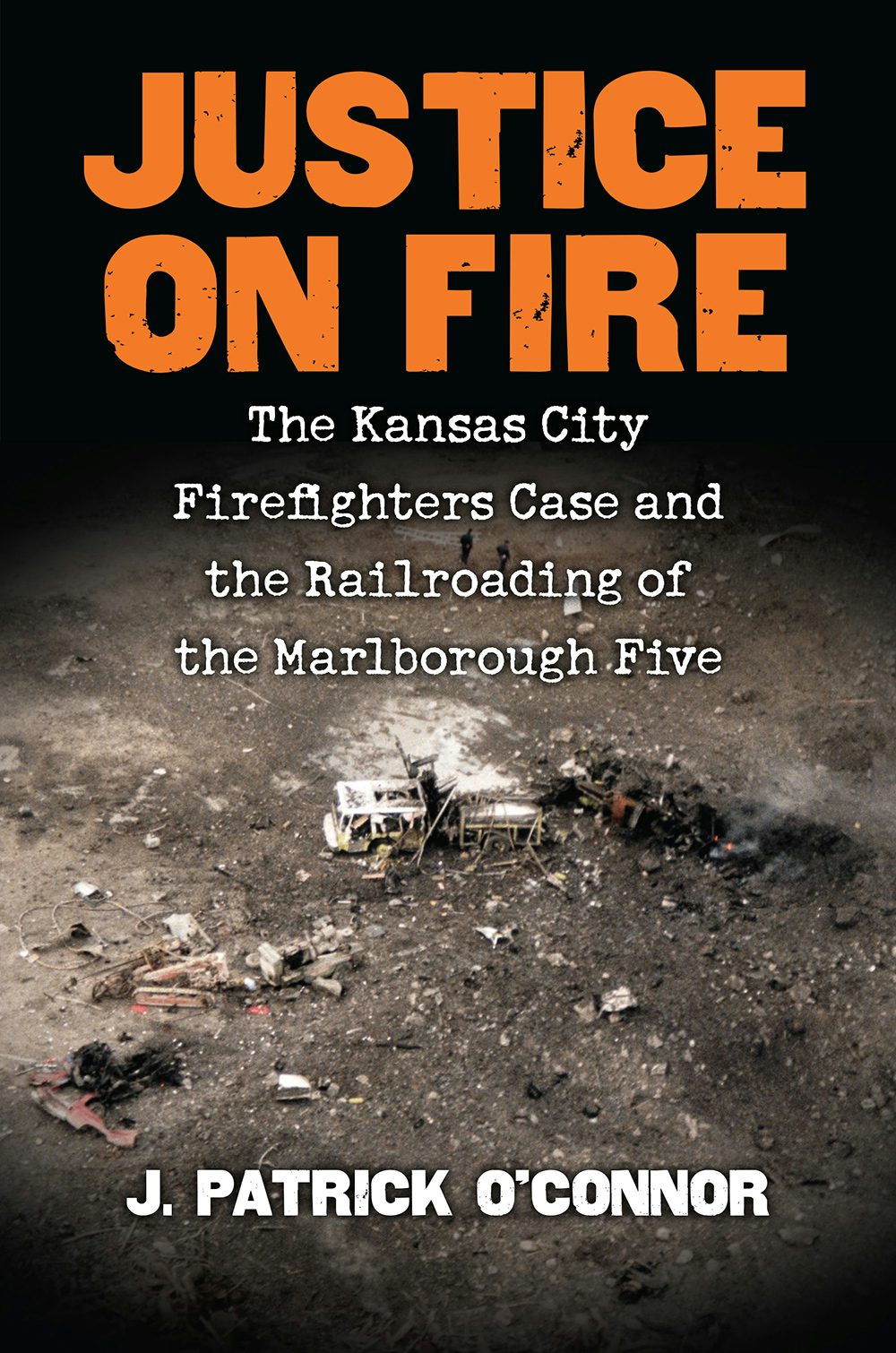
Five innocent people were convicted in February 1997 in the deaths of six Kansas City firefighters in 1988.  These two stories run a total length of 20,000 words, and won the Missouri Bar Association's annual "Excellence in Legal Journalism" award. On Oct. 30, 1998, the 8th U.S. Circuit Court of Appeals denied the appeal in the Kansas City Firefighters case. Read the full opinion here and our analysis of the opinion. On Oct. 4, 1999, the U.S. Supreme Court declined to grant certiorari in the case.

by J.J. Maloney

The Murder of JonBenét Ramsey

May 7, 1999 Updated 8/30/06 and 07/20/08

by J. J. Maloney & J. Patrick O'Connor

Related Story: Solving the JonBenet Case by Ryan Ross. (04/14/03)


Editor's Note:

On July 9, 2008, Boulder County District Attorney Mary Lacy stated that DNA tests conducted by Bode Technology Group revealed that skin cells left behind on JonBenet Ramsey's long underwear point to a killer other than the girl's parents, John and Patsy Ramsey, or her brother, Burke. Mrs. Ramsey died of ovarian cancer in 2006 at age 49.

"To the extent that we may have contributed in any way to the public perception that you might have been involved in this crime, I am deeply sorry," Lacy wrote in an exoneration letter to John Ramsey, who now has remarried and lives in Michigan. "No innocent person should have to endure such an extensive trial in the court of public opinion."

Early in the investigation into the 6-year-old pageant star's brutal murder on Christmas night in 1996, Lacy said that Boulder police discovered male DNA in a drop of blood on JonBenet's underwear that did not match any members of JonBenet's immediate family. The tests conducted by Bode Technology Group, Lacy said, revealed the same DNA that was found previously in the drop of blood was present in three places on JonBenet's long underwear.

Lacy stated that Boulder investigators now hope they'll eventually find a DNA match in the ever-expanding national DNA databank, a sentiment echoed by John Ramsey. "I think the people that are in charge of the investigation are focused on that, and that gives me a lot of comfort," Mr. Ramsey said in an interview with a Denver TV station. "Certainly we are grateful that they acknowledged that we, based on that, certainly could not have been involved."

Even if a DNA match is eventually made, it does not mean that the DNA from this contaminated crime scene will reveal it to be that of JonBenet's killer, although it possibly could. For now, all that is known, is that it is not the DNA of John, Burke, or the late Patsy Ramsey. In the meantime, the JonBenet case will continue unsolved and will remain one of the most botched crime investigations in the annals of U.S. law enforcement.


The brutal murder of 6-year-old JonBenet Ramsey on Christmas night in 1996 shocked America to its core. Just as the Lindbergh baby kidnapping and murder seven decades earlier had seared the nation's consciousness, this murder – of a beautiful and talented child in a wealthy Boulder, Colo., home – renewed every parent's worst nightmare: No child was truly safe, not even tucked in at home on Christmas night.

JonBenet's murder – particularly as the days went by and no arrests were forthcoming – quickly became a national obsession, featured day after day on network news, television tabloid programs, talk radio, newspapers and magazines. Her image flitted across television screens innumerable times, often showing her in a fancy red cowgirl outfit, singing "I want to be a cowboy sweetheart," or dancing across the stage in a glittering Las Vegas showgirl outfit, complete with heavy makeup. Her unusual first name became so well known that like Cher and Madonna she no longer had need of a last name.

The public's shock at the murder soon began to share equal time with its growing dismay at the Boulder police's investigation, a dismay fed by a steady stream of leaks from the Boulder County District Attorney's office about the inept police investigation being conducted. For one thing it became known that the police had badly botched the initial investigation by failing to seal off the crime scene. For another it appeared the police were treating the primary suspects – JonBenet's parents – with kid gloves by not only acquiescing to their refusal to be interviewed at police headquarters, but also to being interviewed separately. Fueled with such information, the media, especially the tabloid television and talk radio shows, were showing no such restraint toward the glamorous child's parents, John and Patsy Ramsey. Some in the media began to point the finger directly at her father. Others implied it was her mother who had garroted the girl. Some speculated the crime had to have been committed by both parents. The tabloids even raised the possibility that her brother Burke, who was just shy of 10-years-old at the time, murdered JonBenet.

Shadow People: How meth-driven crime is eating at the heart of rural America

May 7, 2012 Special to Crime Magazine

“Shadow People” — the term refers to hallucinogenic figures glimpsed by methamphetamine addicts after days without sleep. But, in reality, it’s the addicts themselves who are living in a shadow, growing in numbers, becoming an alarming subculture on the periphery of rural America, engaging in crimes that are having devastating impacts on places where traditional life is valued most. Between May 2010 and October 2011, award-winning journalist Scott Thomas Anderson worked as an embedded reporter with law enforcement agencies, partnering with officers on night patrols, accompanying detectives on warrant searches and probation sweeps, observing SWAT operations and spending hundreds of hours with attorneys and victims’ advocates in small-town courtrooms. The result is Anderson’s new book, Shadow People: how meth-driven crime is eating at the heart of rural America. The following excerpt from Chapter 5 of Shadow People follows several cops and prosecutors in Amador County, California, during a hot week in July, 2010. Available on Amazon.com

by Scott Thomas Anderson

Chapter 5

Jackson, California: June 13, 2010


Mike Collins pounds the accelerator. The voice calling for backup over his radio belongs to a police officer in Sutter Creek, Jackson’s sister city to the north. To Collins, it sounds like a fellow cop is approaching two burglary suspects caught in the act; and he’s confronting them utterly alone. Mosquitoes are swarming as the Jackson cruiser drives under the bloodshot silhouette of a mine frame, ridges and rooftops below swept by a champagne curtain of light. The car moves through an intersection, past a white, plaster slum structure with rusty air units and bed sheets hung for drapes: Carrion eaves, cracked Spanish arches, its condemned walls flash by the veteran’s eye in an instant. Radio traffic advises Collins that the policeman has his suspects cornered in a cemetery. By now, the cruiser has pushed through two staggered intersections to an upper gateway to Sutter Creek. For an instant Collins can see down the rolling vista to a basin of houses and yards a magazine once deemed “the city without crime.” 

It’s all in the eyelids — the burglar’s are low, ruby flaps of half-hung skin. Below them, two pupils shutter into postmortem windows, wobbling and wandering on the salmon-white glaze of his corneas. The eyes are vacant, deeply chiseled into a gaunt, shaven skull. The burglar’s agitated. Trembling. He can barely speak. Moments before, he had no problems pattering to the Sutter Creek officer in front of him, even joking that the reason he and the emaciated woman at his side were spotted creeping out of garages was because they’d been taken by the carnal urge. Laughing, he’d quickly dropped the line that they were just looking for an impromptu place to satisfy it. But two black bags lay near a headstone, and Collins is watching as his fellow officer searches through them, discovering twenty-one stolen items hidden under knotted clothes and a bottle of Hennessy. The last thing the officer pulls out is a roll of toilet paper. Securing his gloves, he moves his fingers up inside its cylinder to discover a crystal pipe loaded with methamphetamine.   

“That’s insulin,” the burglar assures everyone.

Handcuffs slide out of a leather sheath. The Sutter Creek officer moves in, but his suspect suddenly wants out of the graveyard at all costs. The wiry man locks his fists as a frail snare line rattles through his elbows. The much larger officer wrenches the burglar’s forearms. The meth is good for one more push, a trapped tugging and some wordless defiance. Collins is ready to step in and help when the Sutter Creek officer, in one motion, forces his suspect down on the hood of the patrol car.

Scapegoat: The Chino Hills Murders and the Framing of Kevin Cooper

Jan. 30, 2012 Special to Crime Magazine

An excerpt from the recently released book Scapegoat: The Chino Hills Murders and the Framing of Kevin Cooper by J. Patrick O’Connor, editor of Crime Magazine.  Published in January of 2012 by Strategic Media Books, Scapegoat is available at www.strategicmediabooks.com, Amazon.com, barnesandoble.com and other book sellers throughout the United States.

 by J. Patrick O’Connor

Foreword

During the fall of 2008, I was in the San Francisco Bay area on a book tour for The Framing of Mumia Abu-Jamal.  The tour was arranged by Jeff Mackler, the executive director of the Mobilization to Free Mumia Abu-Jamal, and it involved about fifteen speaking engagements at different venues.   Jeff told me that supporters of death-row inmate Kevin Cooper – whom I had not heard of -- would be attending a number of these presentations, and that they would be asking me to write a book about Kevin’s case.  Indeed, two of Cooper’s most dedicated supporters, Carole Seligman and Rebecca Doran, did just that. 

Cooper had been convicted in 1985 of the brutal murders of Doug and Peggy Ryen, their ten-year-old daughter, Jessica, and eleven-year-old houseguest Christopher Hughes, and the attempted murder of the Ryens’ eight-year-old son Joshua. 

Jeff had gotten to know Cooper over the years, and had visited him about twenty times. Kevin’s case was quite different from Mumia’s, he said, in the sense that Mumia is essentially a political prisoner and Kevin was anything but. 

When I decided to begin researching the Kevin Cooper case in early 2009, I had no pre-conceived notions about his guilt or innocence.  Each case is different, radically so.  My first step was to read and notate the trial transcripts, documents of over eight-thousand pages.  I then read all the police reports, witness interviews and various newspaper accounts.  Finally, I read all of the appeals and the judicial rulings.  By this time I was ready to begin interviewing various people involved in Cooper’s trial and his subsequent appeals. 

One problem in researching a crime nearly twenty-five years after it occurred is that a number of key people involved in the investigation and trial have passed away or have retired or have simply forgotten important factual details.  Another obstacle is that, because Cooper technically still has appeals open to him, the San Bernardino County District Attorney’s Office refused to discuss the case.

During the summer of 2009, I made arrangements to interview Kevin Cooper in a visitor’s cell on death row at San Quentin.  On several issues, particularly those regarding his criminal record previous to the Chino Hills trial, I found him protective and less than forthcoming.  That was all behind him, he seemed to suggest.

On the other hand, I was taken by his equanimity and his resolve to prove he was wrongfully convicted of the gruesome Chino Hills murders.  I could see that the many years he had spent on death row, instead of diminishing him, had turned him into a person worthy of the high regard that his supporters – and his attorneys at the Orrick law firm – felt for him.  On death row, Kevin Cooper had finally grown up. 

Contrary to popular belief, most of the nation’s more than three-thousand-five-hundred death row inmates do not profess innocence.  In fact, unlike Kevin Cooper, very few do.  For those who do, the road to exoneration is a long, slow trek that usually fails.  But it does succeed occasionally.  Since 1973, when the U.S. Supreme Court allowed states to resume executions, one-hundred-thirty-six death-row inmates have been exonerated.  In the majority of those cases, the proof of the inmate’s innocence was so convincing that the prosecutor dropped the charges rather than retry the case.  In forty-five cases where there was a retrial, the inmate was acquitted. 

There are two things that do link the Mumia Abu-Jamal and Kevin Cooper cases: Each was prosecuted by a district attorney’s office hell bent on winning a death-penalty conviction; and neither defendant received a proper defense.  What separates the two cases is that, while Mumia’s trial was a mockery of the justice system’s standards for a fair trial, Cooper’s trial had the trappings of fairness – but was lost long before the trial opened.  Two pre-trial developments caused this outcome: The San Bernardino County Sheriff’s Department destroyed evidence that could have exonerated Cooper; and his public defender insisted on going it alone.  Not many Davids actually slay Goliaths. 

This then is a book about a gruesome murder case, painfully recounted; all quotes are from either documents or interviews I conducted doing my research.  It is also a book about how justice can go astray.  It is the true story of the Chino Hills murders, and the prosecution of Kevin Cooper, a prisoner who escaped once too often and found himself in the wrong place at the wrong time.  Since 1985, he has been on death row at San Quentin asserting his innocence in failed-after-failed appeal while awaiting his execution. 

J. Edgar Hoover and the Framing of the Omaha Two

Dec. 28, 2011

Ed Poindexter Mondo we Langa

Ed Poindexter and Mondo we Langa, the leaders of the Omaha chapter of the Black Panther Party in the early 1970s, were framed for the murder of Omaha Police Officer Larry Minard as part of J. Edgar Hoover’s clandestine, illegal counterintelligence operation known as COINTELPRO that targeted Black Panther Party leaders all over the United States. Although neither man had any connection to the murder of the young officer, both remain imprisoned for life. 

by Michael Richardson

The murder of Omaha, Nebraska policeman Larry Minard over 40 years ago and the COINTELPRO-inspired investigation that followed landed two Black Panther leaders – Ed Poindexter and Mondo we Langa – in prison for life.  The scapegoats came to be known as the “Omaha Two.”  In order to pin the police officer’s murder on the two leaders of Omaha’s Black Panther Party, FBI Director J. Edgar Hoover gave a secret order to withhold a crime laboratory report on the identity of the anonymous caller that lured the 29-year-old policeman to his death.

Hoover directed the Federal Bureau of Investigation from 1924 to his death in 1972.  He also directed a secret, illegal, counterintelligence operation within the FBI from 1956 to 1971, codenamed COINTELPRO that targeted radical groups such as the Panthers, Students for a Democratic Society, and the American Indian Movement. COINTELPRO’s stated aim was to destabilize these groups by either murdering their leaders or getting them convicted of felonies. (COINTELPRO is an acronym for Counterintelligence Program.)

Syndicate content