Crime Magazine is about true crime: organized crime, celebrity crime, serial killers, corruption, sex crimes, capital punishment, prisons, assassinations, justice issues, crime books, crime films and crime studies.
Innocence Cases
One Murder, Two Victims: The Wrongful Conviction of Ryan Ferguson
July 22, 2007 Updated Aug. 30, 2011

Ryan Ferguson
New Hearing in Ryan Ferguson Murder Conviction
Cole County Circuit Court Judge Daniel Green has agreed to hold an evidentiary hearing on October 25, 2011 regarding recantations made by the only two witnesses against Ryan Ferguson at his murder trial in 2005. The recantations are part of a habeas corpus petition submitted by Ferguson’s attorney, Kathleen Zellner.
If Judge Green finds the recantations of merit, he could order a new trial for Ferguson. Without the testimony of these two witnesses and with no forensic evidence linking Ferguson to the murder, the case against Ferguson – one of the most bizarre ever mounted – would collapse.
Based on the testimony of Chuck Erickson and Jerry Trump, Ferguson was convicted of the Halloween night 2001 murder of Kent Heitholt, the sports editor of the Columbia (Missouri) Daily Tribune, and sentenced to 40 years in prison. None of the forensic evidence gathered at the crime scene – including fingerprints, hair clutched in Heitholt’s hand and bloody footprints – linked Ferguson or Erickson to the crime.
Erickson, who like Ferguson was a high school junior at the time of Heitholt’s death, began telling friends two years after the murder that he was having “dreams” that he and his friend Ferguson had murdered Heitholt. These comments quickly brought the police to Erickson’s door.
In his 2011 affidavit, Erickson averred, “Ryan Ferguson did not harm Kent Heitholt in any way,” stating that he alone had killed Heitholt although Ferguson was present at the scene.
Trump, a janitor at the newspaper who was on parole at the time for molesting a teenager, told police the day after the murder that he saw two men in the parking lot but could not see them clearly enough to identify. He also said the same thing to his supervisor and several co-workers.
At Ferguson’s trial, Trump told the jury that while he was in prison for a parole violation, his wife sent him a newspaper article with photos of Erickson and Ferguson and from those he was able to positively identify both teenagers as Heitholt’s assailants. He testified he then contacted Boone County D.A. Kevin Boone and became the prosecution’s second witness.
In his affidavit, Trump said his testimony was a lie: it was Crane who met with him in December of 2004 after Trump had been released from prison and showed him the photos of the accused and told him it would be in his interest to identify Ferguson as one of the men in the parking lot the night Heitholt was murdered.
Crane is now a Boone County circuit court judge and has been subpoenaed to appear at the evidentiary hearing before Judge Green.
In a case rife with DNA and other physical evidence, not one shred of evidence linked 17-year-old Ryan Ferguson to the murder of Columbia (Mo.) Daily Tribune sports writer Kent Heitholt in 2001. Ferguson's conviction in 2005 proved only how far the police and prosecution would go to close Columbia's only unsolved murder. A Boone County (Mo.) Judge, at a three-day-evidentiary hearing in mid-July 2008, heard testimony of how the police and prosecution withheld exculpatory evidence from Ferguson's trial attorneys and manipulated and threatened witnesses who dared not support their trumped-up case against Ferguson.
(Editor's Note: CBS's "48 Hours Mystery" broadcast a re-investigation of the case on March 26, 2011)
- Read more
- 35778 reads
The Firefighter Case: Part I
South Kanasa City Blast Site
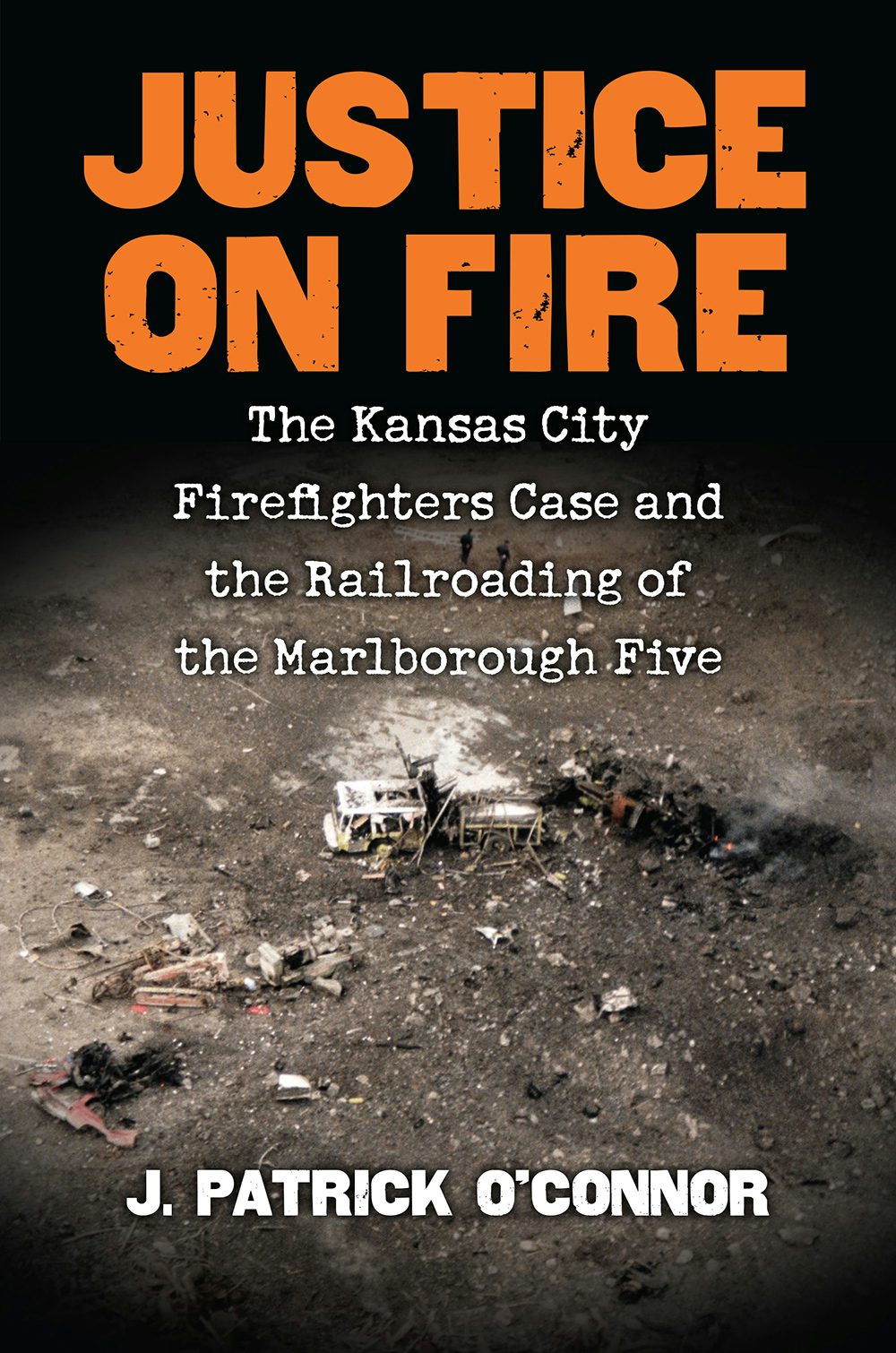
Five innocent people were convicted in February 1997 in the deaths of six Kansas City firefighters in 1988. These two stories run a total length of 20,000 words, and won the Missouri Bar Association's annual "Excellence in Legal Journalism" award. On Oct. 30, 1998, the 8th U.S. Circuit Court of Appeals denied the appeal in the Kansas City Firefighters case. Read the full opinion here and our analysis of the opinion. On Oct. 4, 1999, the U.S. Supreme Court declined to grant certiorari in the case.
by J.J. Maloney
- Read more
- 19583 reads
The Scottsboro Boys: Jim Crow on Trial
July 13, 2009

The Scottsboro Boys
The case of the Scottsboro Boys often seemed like one of dueling prejudices. Entrenched racism against blacks, anti-Semitism, the Madonna/Whore dichotomy, and regional stereotypes would all be on full display as the Scottsboro Boys grabbed headlines for well over a decade throughout the 1930s. It is a story of cowardice and heroism, of lies and manipulation, of fear and hatred, of caring and commitment, a story in which every facet of the human personality is seen in all its embarrassing weakness and glorious strength.
by Denise Noe
- Read more
- 37733 reads
Scapegoat: The Chino Hills Murders and the Framing of Kevin Cooper
Jan. 30, 2012 Special to Crime Magazine
An excerpt from the recently released book Scapegoat: The Chino Hills Murders and the Framing of Kevin Cooper by J. Patrick O’Connor, editor of Crime Magazine. Published in January of 2012 by Strategic Media Books, Scapegoat is available at www.strategicmediabooks.com, Amazon.com, barnesandoble.com and other book sellers throughout the United States.
Foreword
During the fall of 2008, I was in the San Francisco Bay area on a book tour for The Framing of Mumia Abu-Jamal. The tour was arranged by Jeff Mackler, the executive director of the Mobilization to Free Mumia Abu-Jamal, and it involved about fifteen speaking engagements at different venues. Jeff told me that supporters of death-row inmate Kevin Cooper – whom I had not heard of -- would be attending a number of these presentations, and that they would be asking me to write a book about Kevin’s case. Indeed, two of Cooper’s most dedicated supporters, Carole Seligman and Rebecca Doran, did just that.
Cooper had been convicted in 1985 of the brutal murders of Doug and Peggy Ryen, their ten-year-old daughter, Jessica, and eleven-year-old houseguest Christopher Hughes, and the attempted murder of the Ryens’ eight-year-old son Joshua.
Jeff had gotten to know Cooper over the years, and had visited him about twenty times. Kevin’s case was quite different from Mumia’s, he said, in the sense that Mumia is essentially a political prisoner and Kevin was anything but.
When I decided to begin researching the Kevin Cooper case in early 2009, I had no pre-conceived notions about his guilt or innocence. Each case is different, radically so. My first step was to read and notate the trial transcripts, documents of over eight-thousand pages. I then read all the police reports, witness interviews and various newspaper accounts. Finally, I read all of the appeals and the judicial rulings. By this time I was ready to begin interviewing various people involved in Cooper’s trial and his subsequent appeals.
One problem in researching a crime nearly twenty-five years after it occurred is that a number of key people involved in the investigation and trial have passed away or have retired or have simply forgotten important factual details. Another obstacle is that, because Cooper technically still has appeals open to him, the San Bernardino County District Attorney’s Office refused to discuss the case.
During the summer of 2009, I made arrangements to interview Kevin Cooper in a visitor’s cell on death row at San Quentin. On several issues, particularly those regarding his criminal record previous to the Chino Hills trial, I found him protective and less than forthcoming. That was all behind him, he seemed to suggest.
On the other hand, I was taken by his equanimity and his resolve to prove he was wrongfully convicted of the gruesome Chino Hills murders. I could see that the many years he had spent on death row, instead of diminishing him, had turned him into a person worthy of the high regard that his supporters – and his attorneys at the Orrick law firm – felt for him. On death row, Kevin Cooper had finally grown up.
Contrary to popular belief, most of the nation’s more than three-thousand-five-hundred death row inmates do not profess innocence. In fact, unlike Kevin Cooper, very few do. For those who do, the road to exoneration is a long, slow trek that usually fails. But it does succeed occasionally. Since 1973, when the U.S. Supreme Court allowed states to resume executions, one-hundred-thirty-six death-row inmates have been exonerated. In the majority of those cases, the proof of the inmate’s innocence was so convincing that the prosecutor dropped the charges rather than retry the case. In forty-five cases where there was a retrial, the inmate was acquitted.
There are two things that do link the Mumia Abu-Jamal and Kevin Cooper cases: Each was prosecuted by a district attorney’s office hell bent on winning a death-penalty conviction; and neither defendant received a proper defense. What separates the two cases is that, while Mumia’s trial was a mockery of the justice system’s standards for a fair trial, Cooper’s trial had the trappings of fairness – but was lost long before the trial opened. Two pre-trial developments caused this outcome: The San Bernardino County Sheriff’s Department destroyed evidence that could have exonerated Cooper; and his public defender insisted on going it alone. Not many Davids actually slay Goliaths.
This then is a book about a gruesome murder case, painfully recounted; all quotes are from either documents or interviews I conducted doing my research. It is also a book about how justice can go astray. It is the true story of the Chino Hills murders, and the prosecution of Kevin Cooper, a prisoner who escaped once too often and found himself in the wrong place at the wrong time. Since 1985, he has been on death row at San Quentin asserting his innocence in failed-after-failed appeal while awaiting his execution.
- Read more
- 422 reads
J. Edgar Hoover and the Framing of the Omaha Two
Dec. 28, 2011
|
|
|
| Ed Poindexter | Mondo we Langa |
Ed Poindexter and Mondo we Langa, the leaders of the Omaha chapter of the Black Panther Party in the early 1970s, were framed for the murder of Omaha Police Officer Larry Minard as part of J. Edgar Hoover’s clandestine, illegal counterintelligence operation known as COINTELPRO that targeted Black Panther Party leaders all over the United States. Although neither man had any connection to the murder of the young officer, both remain imprisoned for life.
The murder of Omaha, Nebraska policeman Larry Minard over 40 years ago and the COINTELPRO-inspired investigation that followed landed two Black Panther leaders – Ed Poindexter and Mondo we Langa – in prison for life. The scapegoats came to be known as the “Omaha Two.” In order to pin the police officer’s murder on the two leaders of Omaha’s Black Panther Party, FBI Director J. Edgar Hoover gave a secret order to withhold a crime laboratory report on the identity of the anonymous caller that lured the 29-year-old policeman to his death.
Hoover directed the Federal Bureau of Investigation from 1924 to his death in 1972. He also directed a secret, illegal, counterintelligence operation within the FBI from 1956 to 1971, codenamed COINTELPRO that targeted radical groups such as the Panthers, Students for a Democratic Society, and the American Indian Movement. COINTELPRO’s stated aim was to destabilize these groups by either murdering their leaders or getting them convicted of felonies. (COINTELPRO is an acronym for Counterintelligence Program.)
- Read more
- 2370 reads
Reasonable Doubt: The Fashion Writer, Cape Cod, and the Trial of Chris McCowen
July 18, 2011
An excerpt from Peter Manso’s recently published book Reasonable Doubt: The Fashion Writer, Cape Cod, and the Trial of Chris McCowen.
by Peter Manso
- Read more
- 6659 reads
DNA Evidence on Trial: The Curious Case of the Palmist and the “Catwoman”
May 16, 2011

Kathleen Marshall
Andrew Fitzherbert was convicted and sentenced to life in prison on the basis of DNA evidence alone. His case shows that it is often not the technology or the science but the supervising biologist’s subjective interpretation of the results that is the crucial factor in assessing whether a suspect sample and a crime-scene sample “match.”
by Mary Garden
On Friday, February 27, 1998, between 4 p.m. and 8 p.m., veterinarian Kathleen Marshall (subsequently dubbed the “Catwoman”) was murdered in the downstairs clinic of her home in Wilston, on Brisbane’s northside. Her decomposing body with 52 shallow stab wounds was not discovered until Sunday afternoon when two directors of the Cat Protection Society of Queensland (CPSQ), of which Marshall was president, visited her home. Sixteen cats and three dogs, unfed and distressed, were upstairs.
The police investigation initially focused on members of the CPSQ where power struggles and infighting had been a common occurrence, intensifying during the six months before 52-year-old Marshall’s death. In April, however, Ken Cox, a forensic biologist from the John Tonge Center, announced that he had found male blood in the crime-scene samples. Investigators decided to eliminate every male person involved in the deceased’s life, beginning with male members of the CPSQ and any male connected to a female member.
- Read more
- 12155 reads
An Analysis of the 8th Circuit Opinion in the Firefighters Case

South Kansas City Blast Site
by J.J. Maloney
On Oct. 30, 1998 the 8th U.S. Circuit Court of Appeals denied the appeal of five defendants convicted of causing the deaths of six Kansas City firefighters in 1988. The defendants, Darlene Edwards, Frank Sheppard, Earl (Skip) Sheppard, Bryan Sheppard and Richard Brown, were sentenced to life imprisonment without possibility of parole.
For months the defendants, and their attorneys, had been hoping the 8th Circuit’s lengthy deliberations might lead to a new trial. The case was argued before the 8th Circuit on April 15, 1998. At time of oral argument, the three judge panel had sharply questioned Assistant U.S. Attorney Paul Becker, head of the Organized Crime Strike Force in Kansas City, who had prosecuted the case. This sharp questioning caused many to believe the 8th Circuit would overturn the convictions.
- Read more
- 7385 reads